
AI news ·
Commonwealth Short Story Prize winner suspected of being AI-generated as organizers defend judging process
A Commonwealth Short Story Prize winner is under fire after readers accused the published work of being AI-generated. Granta tested it and found it was "almost certainly not produced unaided by a human."
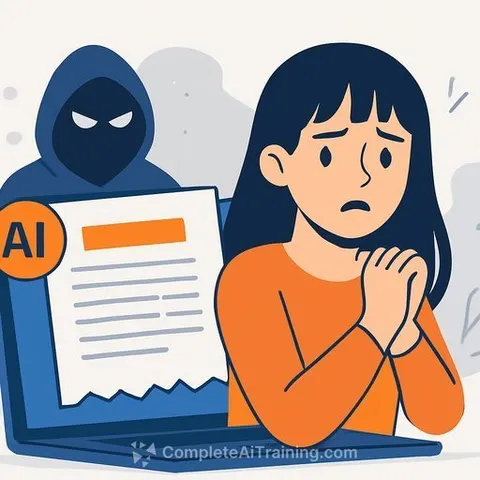
Literary Prize Under Scrutiny Over Suspected AI-Generated Story
A short story that won the Commonwealth Short Story Prize this week has drawn accusations from readers who believe it was written by artificial intelligence. The story, "The Serpent in the Grove," was published by Granta, a British literary journal known for publishing work by authors including Kazuo Ishiguro, Zadie Smith, and Salman Rushdie.
The controversy highlights ongoing tensions in publishing over how literary competitions should handle AI-assisted writing. The Commonwealth Foundation, which administers the prize, said it remains confident in its judging process but acknowledged the challenge posed by evolving technology.
Conflicting Assessments
Razmi Farook, director-general of the Commonwealth Foundation, said in a call with The New York Times that the organization has reviewed reader comments and examined its internal procedures. "We're confident in the rigor of our process, but we're conscious that this is an evolving technological environment," Farook said.
Granta's response differed. Publisher Sigrid Rausing said the magazine tested the story using Claude.ai, an AI detection tool, which concluded the work was "almost certainly not produced unaided by a human."
Rausing acknowledged the ambiguity: "It may be that the judges have now awarded a prize to an instance of A.I. plagiarism - we don't yet know, and perhaps we never will know."
What This Means for Writers
The situation exposes a gap between detection capabilities and certainty. AI detection tools can flag suspicious patterns, but they cannot definitively prove whether human authors used AI assistance-or how much assistance they received.
For writers submitting to competitions and publications, the question remains unresolved: what level of AI use, if any, should be disclosed? Most literary venues have not established clear policies.
Writers interested in understanding how AI tools work and their detection methods may find value in exploring Generative AI and LLM Courses or resources on AI for Writers.