
AI news ·
Companies deploying AI agents as spokespeople need to brief them like one
AI agents speaking for your company need the same message briefing as human spokespeople-but most organizations skip this step entirely. Without it, agents can contradict policy, misrepresent products, or clash with brand voice.
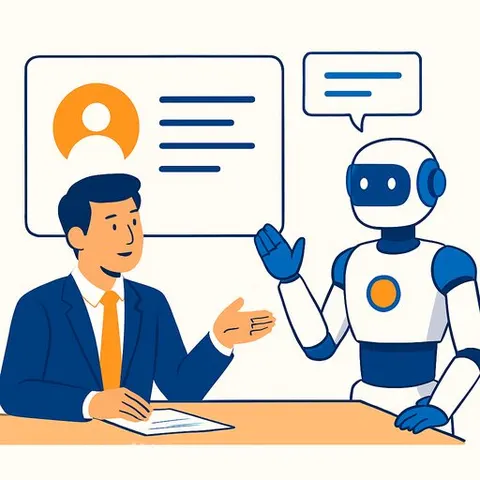
AI Agents Need the Same Briefing as Human Spokespeople
Companies deploying AI agents across customer-facing channels are treating them like software, not like the organizational representatives they've become. This gap creates a risk: agents speaking for your company without the same message discipline you'd expect from a human spokesperson.
The issue centers on preparation. When a human joins your communications team, they receive a briefing document. They learn your positioning, your key messages, your tone, your red lines. They understand what they can say and what they cannot.
AI agents typically don't get this treatment. They're trained on broad data sets, fine-tuned for general tasks, then deployed. Few organizations systematically brief their agents on company-specific messaging, values, or constraints before they start representing the brand in customer conversations, support channels, or public-facing applications.
The consequences are predictable. An agent might contradict official company policy. It might misrepresent a product feature. It might adopt a tone that clashes with your brand voice. It might disclose information you didn't authorize.
These aren't technical failures. They're communications failures-the same kind that would happen if you sent an unbriefed human to speak on your behalf.
What a Proper Briefing Looks Like
Start with core messaging. Define what your agents should communicate about your products, services, and company. Document what they should not say.
Establish tone and voice guidelines. Should your agent sound formal or conversational? Empathetic or direct? Different companies need different personalities from their representatives.
Set boundaries on disclosure. What information can agents share about customers, products in development, or internal processes? What requires escalation to a human?
Create decision trees for edge cases. How should an agent handle a complaint? A request for a refund? A question about something outside its knowledge? Which situations demand human intervention?
Document your brand values. If your company prioritizes transparency, sustainability, or customer privacy, your agents need to reflect that in their responses.
This mirrors what communications teams do with human spokespeople. The difference is scale: you might have one CEO and a handful of executives. You might have dozens or hundreds of AI agents.
The Accountability Problem
There's another dimension: accountability. When a human spokesperson misspeaks, you know who to correct. When an AI agent does, the responsibility diffuses. Did the product team set the wrong training data? Did communications fail to brief it? Did engineering implement the brief incorrectly?
Clarifying this matters. Someone needs to own the agent's messaging. Someone needs to monitor what it's saying. Someone needs to update its briefing when company policy changes.
This is a communications function, not purely a technical one. Communications teams should be involved in designing, briefing, and auditing AI agents before they represent your organization.
What Needs to Change
Communications leaders should treat AI agents as part of the spokesperson ecosystem. That means:
- Sitting in on agent development early, not after deployment
- Writing and maintaining briefing documents for agents the way you would for executives
- Auditing agent outputs regularly to catch drift or inconsistency
- Updating agent instructions when messaging changes
- Establishing clear escalation paths for sensitive topics
For more on how AI fits into communications strategy, see our guide to AI for PR & Communications.
The technical team can build the agent. But communications needs to brief it, monitor it, and take responsibility for what it says. That's the only way to ensure your AI represents your organization as carefully as you would represent yourself.