
AI news ·
Companies face growing pressure to train workers on AI tools
Most workers lack the skills to use AI tools effectively, and HR teams are scrambling to build training programs with no clear strategy in place. Role-specific training, measurable outcomes, and sustained investment are key.
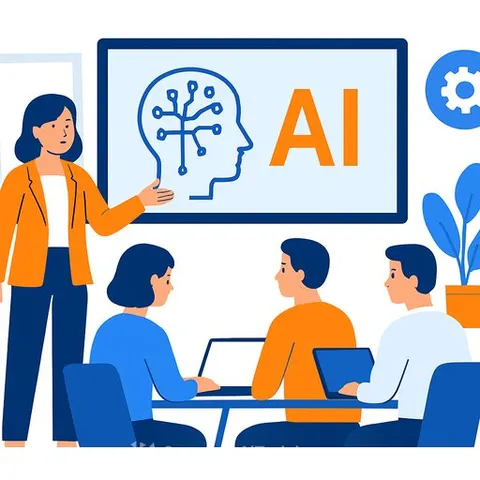
Companies Face Urgent Need to Train Workforce on AI Tools
Employees across industries lack the skills to use artificial intelligence effectively at work, forcing HR departments to build training programs from scratch. The gap between available AI tools and worker competency has become a central business challenge for organizations trying to maintain productivity and competitive advantage.
HR teams are tasked with identifying which employees need training, determining what skills matter most, and delivering programs at scale. Many companies have no clear strategy for this work yet.
What Skills Matter Most
Basic AI literacy-understanding what these tools can and cannot do-forms the foundation. Employees need to know how to interact with AI systems safely and recognize when AI outputs require human review.
Beyond basics, role-specific skills vary widely. A marketer needs different capabilities than an engineer or finance analyst. Prompt engineering has emerged as a practical skill across many functions, allowing workers to extract better results from AI tools through precise instructions.
Technical roles require deeper knowledge. Data scientists and software developers need to understand model limitations, bias detection, and integration challenges.
Building a Training Strategy
HR leaders should start by assessing current capability gaps within their organization. This means identifying which roles will benefit most from AI training and what proficiency levels employees currently hold.
Next comes selecting training formats. Some companies use vendor-provided courses, while others build internal programs. Many combine both approaches-external training for foundational knowledge and custom programs for company-specific tools and workflows.
Budget matters. Scaling training across hundreds or thousands of employees requires sustained investment. Companies that treat this as a one-time initiative typically see training fade as employees return to daily work.
Measuring Progress
HR departments should track whether trained employees actually apply new skills on the job. Surveys and manager feedback provide data points, but the real measure is whether work processes improve and productivity increases.
Retention of trained staff also matters. If high performers leave after upskilling, companies lose the investment and create knowledge gaps.
The Broader Workforce Risk
Employees who don't develop AI competency face career stagnation. Managers increasingly expect team members to work alongside AI tools as a baseline requirement.
For HR, this creates both urgency and opportunity. Organizations that build effective training programs now position themselves to compete for talent and retain experienced workers who might otherwise feel left behind.
An AI learning path designed for HR leaders can provide strategic direction on building these programs, from workforce analytics to talent management decisions.