
AI news ·
Confidently wrong AI threatens lawyers' reputations and underscores verification duties
AI-generated legal output can destroy a reputation overnight, a Massachusetts judge warns. The tech produces authoritative but often confidently wrong results, requiring personal verification.
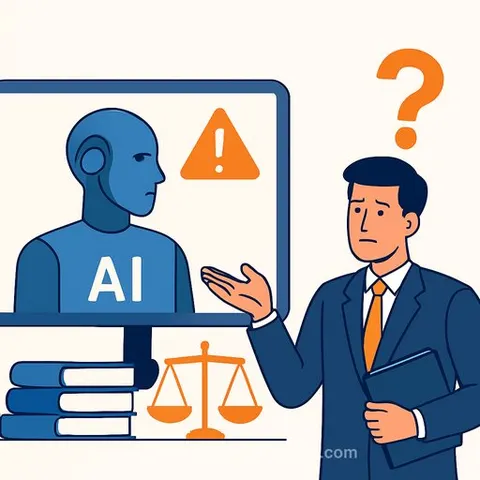
The careless use of generative AI can destroy a legal reputation built over years in a single filing. A Massachusetts District Court judge warns that tools like ChatGPT produce polished, authoritative output that is often confidently wrong, and lawyers who submit unverified AI-generated work risk sanctions, public reprimand, and lasting damage to the bar's credibility.
"A reputation is the sum of countless moments accumulated over the arc of a career," the judge wrote in a recent commentary. "The careless use of generative artificial intelligence can destroy it overnight."
Generative AI collapses the division between gathering information and producing finished work product that defined prior legal technology. Unlike Lexis or Westlaw, which delivered raw material and left lawyering to the lawyer, AI produces output that looks finished and authoritative. Nothing in the final product reveals which parts can be trusted and which cannot.
Existing Rules, New Technology
The Supreme Judicial Court grounded its generative AI guidance in the existing Massachusetts Rules of Professional Conduct. The rules are principle-based, not technology-specific, and their obligations of competence, diligence, and candor will not become obsolete.
Competent representation under Rule 1.1 requires "the legal knowledge, skill, thoroughness, and preparation reasonably necessary." Comment 8 explicitly obliges a lawyer to "keep abreast of changes in the law and its practice, including the benefits and risks associated with relevant technology." A lawyer who uses generative AI without understanding it has not satisfied that obligation. Choosing not to use AI should rest on an informed judgment, not unfamiliarity.
Rule 1.3 demands reasonable diligence and promptness. AI can deliver the promptness; it does nothing for the diligence half, which remains entirely the lawyer's to perform. Rule 3.3 prohibits false statements to a tribunal and requires correction when they occur. Using AI heightens the need for careful verification before any filing.
Two Types of AI Errors
The offending conduct comes in two forms. The first is the hallucinated citation, a reference to a case that does not exist. The second, more dangerous, is the fabricated proposition: a citation to an actual case paired with a holding wholly invented by the AI. Both are confidently wrong, and neither announces itself.
"The common thread is not bad faith," the judge observed. "It is an attorney who used the tool without understanding it, or who signed a filing without verifying what it produced." When flawed output reaches the court, the damage extends beyond the individual attorney to the reputation of the bar at large and the assurance that the legal system can be trusted with serious matters.
Verification Cannot Be Outsourced
Retrieval-augmented generation grounds AI output in verified legal databases, which reduces the risk of a hallucinated citation. It does nothing to prevent a fabricated holding attached to a real case. No tool, however capable, absolves a lawyer of the professional judgment required to verify every factual assertion, legal argument, and citation before submission.
A practice worth consideration is noting AI use in filings. Adding a certification that all AI-assisted content has been personally reviewed and verified for accuracy exceeds current SJC guidance but aligns with the candor obligations the rules demand. "Doing so invites the kind of scrutiny responsible AI use should be able to withstand," the judge wrote.
The majority of U.S. law schools now offer dedicated AI coursework, and a growing number require it. Attorneys already in the profession have the same obligation. Continuing education, including AI for Legal Professionals Courses, helps lawyers meet their duty to understand the technology's benefits and risks.
Why this matters for legal professionals
A career's reputation rests on countless moments of competence, diligence, and candor. One unverified AI filing can erase that trust. Every lawyer using generative AI must personally examine its output before it reaches a court or client, because the tool does not know its own limits, and a lawyer's name is the one attached to the work. The credibility of your practice, and of the legal system itself, depends on that discipline.