
AI news ·
Consumers feel less judged by AI than human agents, research finds
Over a third of consumers feel less judged by AI than human reps, and 30% have used chatbots to avoid embarrassment. But bad AI interactions erode company trust, making reliability as critical as the judgment-free appeal.
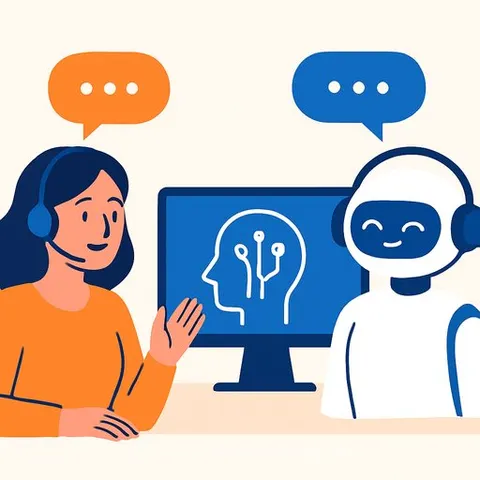
Customers Increasingly Turn to AI for Support Without Fear of Judgment
More than one-third of consumers feel less judged interacting with AI than with human customer service representatives, according to research from Cyara, an AI-powered customer experience firm. The shift is reshaping how companies should think about support interactions, particularly in sensitive situations where customers fear embarrassment.
Nearly half of Gen Z and millennials use chatbots specifically to avoid awkwardness with human representatives. Among all consumers, 30% have used a chatbot because they felt too embarrassed to speak to a person, and 25% have avoided contacting a company entirely due to shame.
Why Anonymity Changes the Equation
The anonymity advantage transforms AI from a mere efficiency tool into something customers trust with personal concerns. Financial services and tax support represent prime opportunities-conversations about missed payments, overdraft fees, and debt carry stigma that makes customers hesitant to engage with humans.
Yet this emotional safety is fragile. More than half of consumers say a bad AI interaction reduces their trust in the company itself. Consistency and reliability matter as much as the judgment-free environment.
Digital Avatars Add a Human Touch
Some companies are moving beyond text-based chatbots to photorealistic digital human avatars. UneeQ, which builds these systems, gives its avatars backstories-similar to how actors prepare for roles-to make them feel more authentic and relatable.
Danny Tomsett, CEO of UneeQ, said the approach addresses both informational and emotional needs. "What digital humans have done really well is connect at a more human level and address that emotional need, not just the informational need," he said.
A backstory helps customers relax around the interaction. Even when people know they're speaking with AI, they connect emotionally-much like audiences connect with animated film characters.
Where These Systems Perform Best
Digital avatars work particularly well when customers feel insecure or fear making wrong decisions. Buying a familiar product is transactional, but purchasing something unfamiliar or choosing between technical options creates friction. A knowledgeable avatar can reduce that anxiety.
Tomsett noted that the initial interaction is often the hardest moment for customers. But once they start talking, "we end up winning them over more times than not."
Adoption spans age groups. Younger users transition naturally from gaming experiences with digital characters. Unexpectedly, UneeQ's highest usage demographic includes people 65 and older.
Setting Guardrails for Consistency
As companies deploy AI agents for customer interactions, ensuring consistent behavior becomes critical. Amitha Pulijala, chief product officer at Cyara, said guardrails around tone, neutrality, and empathy matter more than hard-coding specific response paths.
With non-deterministic AI, the same question can generate different responses depending on context or phrasing. That flexibility is valuable, but only if the tone remains supportive. Testing must validate that responses feel safe and free of bias across scenarios.
When a customer asks "How do I get approved for this loan?" or "What does this bank alert mean?" the system must recognize sensitivity and respond without assumptions or judgment.
Pulijala said the goal is ensuring "every version of the answer feels safe, respectful, and aligned to the brand experience."
The Reliability Challenge Ahead
As AI becomes more sophisticated and customers grow comfortable with it, the business challenge shifts. Companies must move beyond convincing people to use AI and focus instead on making those experiences trustworthy and genuinely helpful.
For customer support teams, this means understanding that AI isn't replacing empathy-it's providing a different channel where some customers feel safer asking for help.
Learn more about AI for Customer Support and how Generative AI and LLM technology powers these systems.