
AI news ·
Contact centers lose entry-level jobs to AI as governments weigh new labor regulations
AI will eliminate contact center roles over the next two to five years. Yet 85% of consumers already cut spending or abandon brands after poor service.
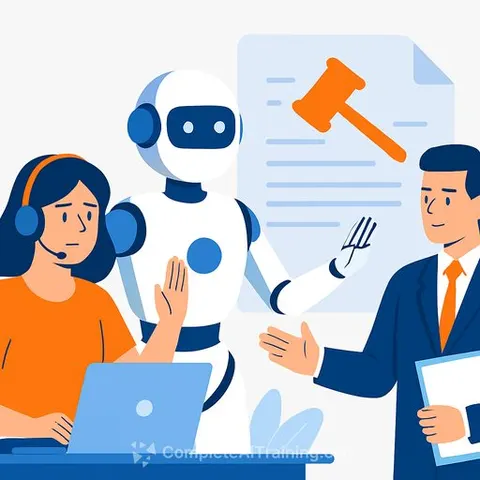
AI-driven job cuts in contact centers will hit some industries far harder than others, according to a new Forrester Research report, while regulators from China to California begin exploring ways to slow the technology's displacement of human workers. Retail, hospitality, and food service companies with high-volume call centers face the steepest losses, whereas utilities, banking, and insurance - where agents handle more complex cases - are likely to retain more staff. The findings arrive as a separate global survey from Genesys shows that 85% of consumers have already cut spending or abandoned a brand entirely after a poor customer service experience, and 84% will give AI-powered service only three attempts to resolve their problem.
AI job cuts vary by industry
The Forrester report, "The Quantitative Employment Impact Of AI On Customer Service Jobs," predicts that over the next two to five years, AI will eliminate some contact center roles while creating a smaller number of new positions for specialists who monitor, update, and manage AI agents. Highly skilled human agents will remain necessary for complex cases that AI cannot solve, said co-author and analyst Kate Leggett. However, the distribution of cuts will be uneven.
"Some jobs in industries like retail and food services, arts and entertainment, your customer service reps are paid pretty poorly - barely a living wage," Leggett said. "Those jobs are getting replaced by AI because they tend to the simpler questions [such as]: 'Where's my order?' 'Does this dress come in blue instead of green?' 'How do I do returns, exchanges, refunds?'" In contrast, she noted, industries like utilities, mining, and manufacturing pay higher salaries and handle harder problems, which makes them less vulnerable to automation.
Apprenticeship model gains traction
As entry-level contact center jobs disappear, training new hires becomes a puzzle. Leggett pointed to the possibility of customer service pods - small teams comprising a couple of agents, a manager, and an AI specialist - that let newcomers apprentice alongside experienced staff. This structure would allow entry-level workers to learn complex problem-solving on the job, while also keeping AI agents updated and accurate when, for example, a product defect triggers a flood of calls.
Programs designed to build these skills are becoming available. An AI Learning Path for Call Center Supervisors can help managers and specialists understand how to oversee hybrid teams and maintain AI performance. Yet Leggett cautioned that not every contact center will automate quickly. "Not all contact centers are going to agentify their operations in two years or five years," she said. "There's a lot of entry-level work that still exists. Some contact centers will never be able to get to the automation rates that we project because they're just not set up for it."
Regulators worldwide begin to act
Governments are starting to examine whether companies should be allowed to replace humans with AI without restriction. Chinese courts have already limited headcount reductions driven by AI, and the European Union's AI Act signals possible future limits on AI-related layoffs. In the U.S., New York requires companies to disclose when AI triggers layoffs - though no firm has done so yet - and a proposed California bill would mandate 60 days' notice for "technological displacement." Last May, California Governor Gavin Newsom signed an executive order exploring severance standards and employment insurance for workers displaced by AI. The National Labor Relations Board has not yet weighed in on whether federal labor law gives unions more power to contest AI layoffs.
Customers lose patience with AI service
The Genesys "2026 State of Customer Experience Report," which surveyed 5,800 consumers across 20 countries and 1,500 CX leaders, reveals a sharp drop in tolerance for flawed AI interactions. A full 95% of consumers expect not to have to repeat information they already gave a chatbot when they are handed off to a human agent. Yet only 24% of CX leaders believe their organizations are minimizing the effort customers must make to resolve issues. Many contact centers still struggle with data readiness, aging infrastructure, and handoff processes that force customers to restate their case.
Customer support teams looking to close this gap can turn to resources like AI for Customer Support for guidance on blending human empathy with AI efficiency. The stakes are clear: 85% of consumers said they spent less or stopped using a brand altogether after a bad service experience, and 84% give brands just three chances to get it right before they walk away.
Why this matters for customer support professionals
The shift toward AI in contact centers does not spell the end of human agents, but it demands a different set of skills. Workers who can manage AI tools, interpret complex customer situations, and mentor new hires through apprenticeship models will be in demand. Rather than competing with bots on simple queries, support professionals have a clear path: move into specialist roles that require judgment, empathy, and technical oversight. Those who build these capabilities now will be positioned for the smaller, higher-value jobs that AI does not eliminate.