
AI news ·
Coursera launches AI-personalized short-form video feed for bite-sized learning
Coursera launched a scrollable feed of short educational videos that uses AI to match content to each user's interests, career goals, and past activity. The feature is designed as an entry point to longer courses, not a substitute.
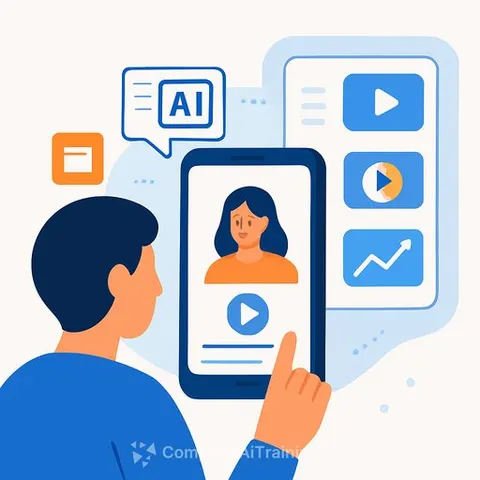
Coursera Launches AI-Personalized Short-Form Learning Feed
Coursera introduced a scrollable feed of bite-sized educational videos that uses AI to match content to individual users based on their interests, learning habits, career goals and past course activity. The company positioned the feature as an entry point to longer courses and certifications, not a replacement for them.
The feed covers coding, data science, business, productivity and personal development. It continuously adapts recommendations based on how users engage with and complete lessons.
What This Means for Educators and Learning Leaders
The shift toward short-form, AI-curated content reflects how people now consume information. Professionals often lack time for full courses but can absorb lessons in five-minute increments during their day.
For educators managing professional development programs, this model creates a practical problem: how do you encourage deeper learning when short-form content is designed to be friction-free? The answer Coursera offers is to treat these lessons as discovery tools that lead to certification programs and skill credentials.
The platform's design mirrors recommendation systems used by streaming services and social media. Users see personalized suggestions rather than browsing a catalog. This increases the chance they'll encounter relevant content without searching for it.
Broader Industry Shifts
Online education platforms are competing on personalization. As more providers adopt similar recommendation-driven models, the ability to match learners with content becomes table stakes rather than a differentiator.
Workforce development teams are also watching this closely. AI-personalized skill content allows training to adapt as job roles change, rather than relying on static course catalogs updated annually.
The underlying technology-generative AI and behavioral data analysis-enables platforms to understand not just what someone learned, but how they learn and what they need next.
Practical Implications
- Learners face lower barriers to exploring new subjects, which can increase skill acquisition across organizations
- Short lessons fit fragmented schedules, making professional development less dependent on dedicated training blocks
- Platforms can now guide users from casual exploration to formal certifications, creating clearer pathways to credentials
For education professionals, the question is whether your organization's learning infrastructure can accommodate this shift. If employees are learning through personalized feeds rather than prescribed courses, how do you track progress and measure competency?
Learn more about AI for education and how these systems are being deployed across different sectors.