
AI news ·
Court rules AI platform chats with Claude are not protected by attorney-client privilege
A federal judge ruled that messages sent to Claude, a public AI platform, have no attorney-client or work product protection. The defendant used it alone, without his lawyer's direction, and Claude's privacy policy removed any confidentiality claim.
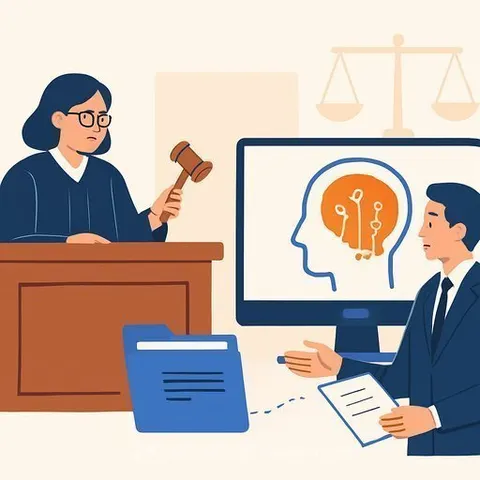
Court Rules AI Platform Communications Lack Legal Privilege Protection
A federal judge in New York has found that communications between a defendant and a public generative AI platform do not qualify for attorney-client privilege or work product protection, even when used to develop legal defense strategies.
In U.S. v. Heppner, the Southern District of New York examined materials seized from the defendant's home during a search warrant execution related to securities and wire fraud charges. The defendant had used Claude, a generative AI platform, to prepare reports outlining defense strategies after receiving a grand jury subpoena-but without his attorney's direction.
Why the Court Rejected Privilege Claims
The court dismantled the defendant's privilege arguments on multiple grounds. First, Claude is not an attorney, so communications with it fall outside the attorney-client relationship that privilege requires.
Second, the materials lacked the confidentiality necessary for privilege protection. Claude's privacy policy explicitly states that user inputs and outputs are used to train the model and disclosed to third parties. This public nature of the platform eliminated any reasonable expectation of confidentiality.
Third, the defendant did not seek legal advice through Claude. His attorney never directed him to create the materials, which undermined any claim that they served the purpose privilege protects.
Work Product Doctrine Also Failed
The work product doctrine-which shields materials prepared in anticipation of litigation-also did not apply. Even assuming the materials qualified as work product, the court said, they were neither prepared by nor at the direction of the defendant's counsel. They did not reflect his counsel's strategy at the time of creation.
The distinction matters: work product protection covers materials created under attorney supervision, not independent efforts by a party using a third-party tool.
The case remains at trial. Legal professionals should note the implications for their own practices: using public AI platforms to develop case strategy without attorney involvement creates discoverable materials that may lack protection.
For guidance on managing AI tools responsibly in legal work, see AI for Legal and the AI Learning Path for Paralegals.