
AI news ·
Courts find AI chatbot prompts and responses lack attorney-client privilege
Courts rule attorney-client privilege does not cover third-party AI chats. Prompts sent to external platforms lack confidentiality and can be subpoenaed by opponents.
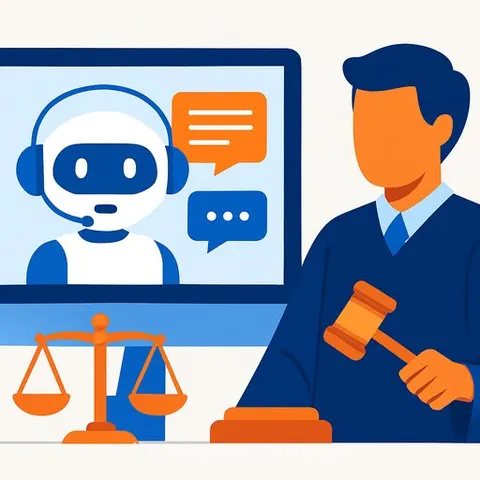
Courts are increasingly ruling that conversations with AI chatbots do not receive the same confidentiality protections as communications with a human lawyer. This shift puts legal professionals on notice that using third-party AI platforms for legal advice risks disclosure to opposing parties.
Attorney-client privilege is designed to encourage open communication between lawyers and their clients. The privilege protects confidential communications from being revealed in court. But when a client or attorney turns to an AI tool-especially a public or third-party platform-courts have found that those interactions are not shielded.
Recent cases set the tone
In several recent cases, judges have treated AI chatbot prompts and responses as analogous to internet searches. Just as a search engine query is not confidential, a conversation with an AI assistant on a platform like ChatGPT or a legal research tool may be discoverable. The reasoning: the AI is not a human lawyer, and the user has no reasonable expectation of privacy when communicating with a software service hosted by a third party.
One key factor is whether the AI tool is used internally within a law firm or through an external provider. Even when firms deploy AI for document review or legal research, if the data passes through an outside vendor's servers, the confidentiality claim weakens. Courts are cautious about extending privilege to machine-generated outputs, especially when the technology is not under the direct control of the attorney.
The risk of using third-party platforms
Many legal professionals use AI tools for tasks like drafting documents, summarizing cases, or predicting outcomes. But these tools often store data on external servers, and their terms of service may grant the provider rights to review or use the data. If a dispute arises, opponents can argue that the AI interactions are not privileged and can be subpoenaed.
Some firms have attempted to claim privilege over AI-generated work product, but success has been limited. Courts look at whether the AI was merely a tool assisting the lawyer or whether the lawyer's independent judgment was applied. The more the AI acts as a standalone advisor, the harder it is to protect the communication.
What this means for legal practice
Attorneys must carefully evaluate the AI tools they use and the terms under which they operate. Using a consumer-grade chatbot for client matters is particularly risky. Even enterprise-grade AI services require clear data handling agreements and a strong argument that the tool is an extension of the lawyer's own work, not a separate source of advice.
Some commentators suggest that the legal profession needs updated ethics rules to address AI use. Bar associations are beginning to issue guidance, but the case law is still developing. The evolving case law around AI and privilege is a topic of ongoing discussion in resources like AI for Legal.
Why this matters for legal professionals
For lawyers and in-house counsel, the message is clear: treat AI prompts like you would treat a public conversation. Do not share confidential client information with AI tools unless you have a specific, vetted agreement that guarantees privacy and that the tool's outputs are under your control. The privilege that protects your conversations with a human lawyer does not automatically extend to a machine. As courts continue to draw this line, the burden is on the profession to adapt its practices before a breach occurs.