Decagon's $4.5B valuation puts AI support on notice: here's what to do next
An AI customer support startup was reportedly valued at $4.5 billion. That number matters. It signals investor confidence that AI won't just sit in pilots - it's expected to carry real support volume, with enterprise-grade reliability.
If you lead support, this is your memo: budgets are moving, expectations are rising, and your playbook needs an AI lane that's measurable, safe, and scalable.
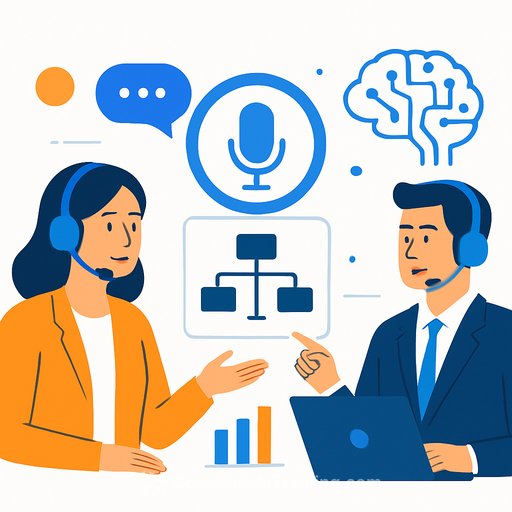
What AI support platforms are winning on
- Instant self-service: high-intent chat and email deflection with clean handoffs to agents.
- Agent assist: suggested replies, summaries, and next-best-actions inside the workspace.
- Knowledge retrieval: live access to policies, KB, and tickets without manual searching.
- Quality and compliance: automated QA, sentiment, PII redaction, and conversation scoring.
- Analytics: intent mapping, containment, and cost-per-contact clarity.
Your 90-day plan
- Map top 10 intents by volume and pain (refunds, shipping, password resets, billing disputes).
- Clean the inputs: update your KB, tag 1,000+ tickets per top intent, remove outdated policies.
- Pilot one high-volume channel (chat or email). Keep scope tight. Ship in two weeks.
- Set guardrails: approved response styles, restricted topics, fallback "I don't know" rules, human handoff.
- Instrument the metrics up front: baseline AHT, FCR, CSAT, deflection, and cost per contact.
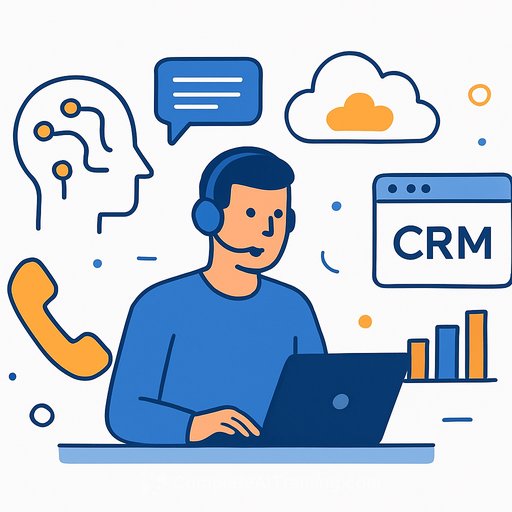
- Integrate where it counts: helpdesk, identity, order data, and policy docs. No integrations you won't use.
Metrics that prove it's working
- Containment/deflection rate: percentage of contacts resolved without an agent.
- First contact resolution (FCR): holds only if resolution quality stays high.
- AHT and handle variance: shorter, more consistent interactions.
- CSAT/CES: no drop allowed - track by intent, not just overall.
- Cost per contact: include platform, tokens/usage, and integration overhead.
- Backlog and reopen rate: fewer repeats, cleaner queues.
Risk controls leadership will ask for
- Truthfulness: ground answers in approved sources only; log citations with every response.
- Safety: PII redaction, profanity filters, and strict refusal rules for legal/medical/financial advice.
- Compliance: exportable audit logs and data residency options; SOC 2 and GDPR alignment.
- Human-in-the-loop: low-confidence answers route to agents by design.
- Governance: defined owners for prompts, sources, and release approvals. Align to frameworks like the NIST AI RMF.
Build vs. buy: quick checklist
- Coverage: chat, email, voice, and in-app. Are handoffs seamless?
- Retrieval: can it cite docs, tickets, and order data with freshness controls?
- Controls: tone, policy constraints, blocklists, and message-level auditing.
- Security: SSO, least-privilege connections, encryption, and redaction.
- Cost clarity: seat vs. usage, token rates, and overage rules you actually understand.
- Change speed: can your team ship updates without vendor tickets?
Where agents fit now
Agents don't disappear. Their work shifts. Think AI coaches, policy editors, and specialists who handle exceptions and escalations that AI shouldn't touch.
Train them to review AI transcripts, tighten prompts, and improve source material. This improves accuracy and keeps your brand voice intact.
A simple ROI model
Start with current monthly contacts and cost per contact. Set a conservative target (e.g., 15-25% deflection) and calculate savings against platform cost. Keep a quality gate: no savings counted if CSAT drops on AI-handled intents.
Practical implementation tips
- Write short, source-backed answers. Long replies increase risk and reduce trust.
- Keep a "known gaps" list. If AI falters on a topic twice, fix the source or block it.
- Version your prompts and policies. Roll back instantly if quality dips.
- Run weekly reviews on 50 random AI conversations. Score accuracy, tone, and policy fit.
Level up your team
If you're building an AI-assisted support org, get your leads and senior agents trained on prompt strategy, retrieval, and governance. The skill gap shows up fast once pilots go live.
Curated learning for support roles: AI Learning Path for User Support Specialists, AI Learning Path for Service Managers, and AI Learning Path for Receptionists.
Bottom line: that $4.5B valuation is a signal. AI-backed support is moving from "nice to try" to "expected to deliver." Get your first intent live, measure hard, and keep humans in control.
Your membership also unlocks: