AI, Accreditation, and the Future of Faculty & Staff Roles: An HR Playbook
Higher education has a people problem, not a technology problem. Faculty are often treated like instructional labor, HR is boxed into compliance, and accreditation feels like paperwork. AI exposes the cracks. It also gives HR a chance to bring people systems, mission, and academic work into sync.
The risk isn't AI replacing people. The risk is institutions failing to redefine roles, skills, and support so the work stays meaningful, capable, and continuous. Done well, AI frees your teams to do what matters: build learning experiences, mentor, research, and serve students with care.
What AI Changes - And What It Doesn't
AI is now part of almost every academic and administrative function. It speeds tasks. It does not replace relationships.
- Teaching: lesson drafting, formative feedback, course iteration.
- Research: literature scans, outlines, synthesis support.
- Student services: advising triage, scheduling, information flow.
- Administration: admissions ops, enrollment workflows, HR transactions.
Use AI to clear low-value work. Then invest that time in the human core: trust, mentorship, and collaboration. That outcome won't happen by accident. HR has to design for it.
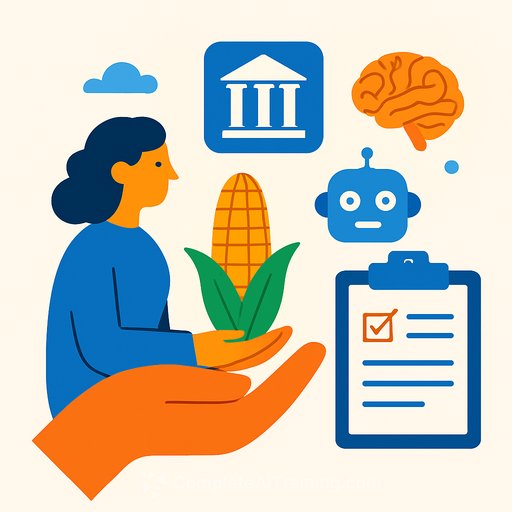
The Texas Lesson: Don't Eat Your Seed Corn
Entry-level staff work is the most exposed to automation: data entry, documentation, scheduling, research prep, advising support. Cutting those roles might look efficient this year. It drains your leadership pipeline next year.
Redesign early-career jobs as development paths, not clerical endpoints. Keep AI for throughput; keep people for connection and judgment.
- Shift job purpose from "perform tasks" to "coordinate outcomes."
- Build rotations across advising, enrollment, and departmental support.
- Teach core skills: communication, empathy, collaboration, problem-solving.
- Make AI fluency part of the role: prompt quality, verification, and handoffs.
- Set clear progressions tied to visible competency gains, not time served.
Think First: Don't Squat With Your Spurs On
Don't bolt AI onto broken processes. Don't rewrite strategy without connecting faculty roles, staff roles, and accreditation requirements.
Create one governance path for people, tech, and mission. If the use case doesn't serve students, improve teaching, support research, or reduce friction for staff, pause it.
- Stand up a joint AI + Human Capital council with faculty, staff, and leadership.
- Approve use cases based on purpose, risk, and measurable outcomes.
- Write lightweight policy: data privacy, academic integrity, accessibility, and transparency.
- Fund change management: training, job redesign, and workflow updates.
Use Accreditation as a Strategic Lever
Treat accreditation as a compass, not a checklist. It already points to mission, quality, impact, and ethics. Use it to connect AI adoption to people systems.
- Growth: data-informed recruitment and student success analytics that fit your mission.
- Quality: automate administrative load so faculty can teach deeply and show outcomes.
- Research: speed synthesis while clarifying why your work matters and who it serves.
- Partnerships: build ethical, student-centered collaborations with industry and community.
For reference, see accreditation resources such as AACSB Business Accreditation Standards and EFMD's EQUIS.
Make Values Measurable
Most strategic plans talk about societal impact, ethics, inclusion, agility, and a global mindset. Few institutions measure them at the person level. Close that gap.
- Translate values into role expectations for faculty and staff.
- Tie evaluations to team goals and student outcomes, not just individual outputs.
- Track impact with simple dashboards: student belonging, advising resolution time, course improvement cycles, research relevance.
- Reward mentorship, innovation in teaching, and community contributions with real weight in promotion and merit.
A Practical HR Roadmap (Next 90 Days)
- Set governance: launch the AI + Human Capital council; define decision rights and a one-page policy.
- Map work: inventory tasks by unit; tag for automate, augment, or keep human-only.
- Redesign roles: update job families with AI-augmented workflows and clearer growth paths.
- Skills first: publish a cross-campus skill framework (communication, collaboration, problem-solving, data literacy, AI fluency).
- Rework evaluation: add goals for mentorship, course iteration, student service quality, and verifiable impact.
- Build tiered AI literacy: foundations for all, tool skills for operators, governance for leaders. Consider structured programs via Complete AI Training.
- Protect equity: monitor workload shift, bias in tools, and access to training.
- Measure what matters: pick five metrics and review monthly: time saved, student satisfaction, teaching improvement cycles, research throughput (with quality checks), and staff progression.
Job Redesign: Simple Examples
- Academic advisor (early-career): AI drafts plans and follow-ups; advisor spends time in live conversations, triage, and referrals; success measured by resolution speed and student belonging.
- Faculty (teaching-focused): AI assists with prep and formative feedback; faculty deepen applied learning and mentorship; success measured by course improvement cycles and student outcomes.
- Department coordinator: AI handles forms and scheduling; coordinator becomes a project manager for events, communications, and data hygiene; success measured by cycle time and stakeholder satisfaction.
What This Means for HR
Your role is to connect strategy, people, and accreditation into one operating system. Keep the pipeline healthy. Make skills visible. Pay for the behaviors you say you value. Teach everyone how to work with AI without losing judgment or care.
As Texans say, don't eat your seed corn. Use AI to clear the noise, not to erase the path for your next generation of talent. Done poorly, roles shrink and resilience drops. Done well, work becomes more human, not less - and your institution stays worthy of its mission.
Your membership also unlocks: