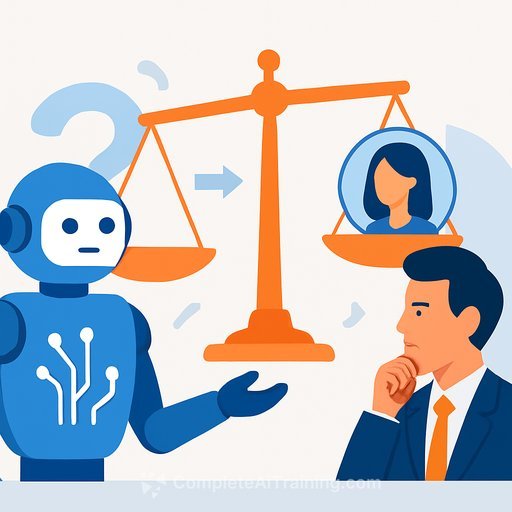
AI Hiring Promises Fairness. It Often Redefines It.
Nearly every hiring team now uses AI somewhere in the funnel. Some believe it trims human bias. Others fear it scales inequality. Both miss a quiet risk: once you adopt AI, it can rewrite what "fair" means inside your company.
If you don't keep watch, the system narrows your talent pool, sidelines local expertise, and locks in one interpretation of fairness-without anyone noticing until the pipeline dries up or every shortlist looks the same.
What a three-year field study revealed
A global consumer-goods company handling 10,000+ applicants a year swapped résumé screens for blinded, gamified assessments scored by an algorithm. The model was trained on current employees' game results tied to performance, hiding names, schools, and demographics.
HR pushed for consistency across candidates. Frontline managers valued context-role, market, team fit. Both views had coexisted. The algorithm turned HR's principles into hard rules that were tough to bypass, and the "local context" view faded in practice.
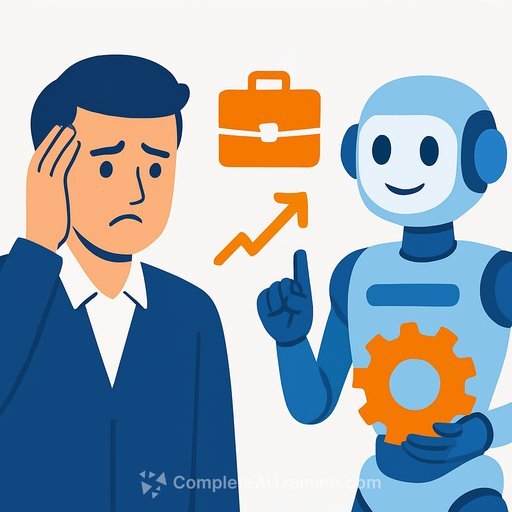
One senior manager tried to hire an intern he had mentored and trusted for a fast-growing region. The model labeled the candidate a poor fit based on personality data. HR held the line. The manager saw the block as unfair and blind to real-world performance potential.
Ask better questions
1) What versions of fairness exist here?
Fairness rarely has a single meaning. HR may define it as consistent procedure. Managers may define it as context-sensitive judgment. If those definitions aren't surfaced early, the AI will only reflect the loudest one.
- Shadow real hiring decisions across HR, managers, legal, and candidates. Document examples each group calls "fair" and "unfair."
- Turn those examples into concrete rules and exception patterns that inform design, testing, and rollout.
- Create ongoing "ethical infrastructures" (e.g., cross-functional debate sessions) where disagreements about thresholds and exceptions are expected and resolved, not dismissed.
2) Who gave the AI its authority, and based on what?
Systems don't grant themselves authority-people do. Vendors and sponsors often frame tools as "objective" or "scientific," which can crowd out healthy skepticism and dismiss local insight as "bias."
- Audit the claims: Who benefits from this system? What fairness metrics are used? Whose expertise gets sidelined?
- Build mixed implementation teams with real veto power: HR, data science, business leaders, legal, and reps for those most affected. See Microsoft's Responsible AI resources for useful patterns.
- Establish an exception path that's fast, documented, and reviewed. Treat justified overrides as learning data, not rule-breaking.
3) Which version of fairness does the system reinforce over time?
Once encoded into thresholds and workflows, one view becomes the default. At the company above, candidates above 72% auto-advanced; below that, auto-reject. Local needs and outlier potential lost ground. Because no one reviewed the rejects, the organization had no idea what it was missing-confusing silence with success.
- Run scheduled fairness reviews with HR, managers, data science, and legal. Inspect real cases next to model outputs.
- Make thresholds, weights, and inputs adjustable. Use tools like IBM AI Fairness 360 to test trade-offs and "what-if" scenarios.
- Sample and manually review a portion of auto-rejects every cycle. Track who gets rescued and why.
- Monitor outcome quality by role and region: time-to-fill, offer acceptance, performance, turnover, and team diversity-together.
- Give managers a structured feedback channel with an SLA for response. Treat patterns in that feedback as model update candidates.
Practical guardrails you can implement next week
- Define your fairness north stars (e.g., consistency, equal opportunity, local fit) and how to balance them when they conflict.
- Publish model cards: data sources, exclusions, known limits, and expected use. Avoid training only on current "top performers" that encourage cloning.
- Pilot in shadow mode before full rollout. Run A/B tests and measure shortlist variety, quality, and hiring speed, not just pass rates.
- Keep an exception log. Review overrides monthly to refine thresholds and rules.
- Clarify decision rights: where AI recommends vs. where humans decide-and what evidence is required to override.
Red flags
- "The model is fair" claims without test results and audit trails.
- Thresholds no one can explain or change.
- Vendor contracts that block independent audits.
- Shortlists that look eerily similar across teams or markets.
- Rising time-to-fill in hard markets while pass rates drop.
The job of fairness belongs to leaders
Your role is to keep multiple definitions of fairness visible, make clear who authorizes the system and why, and review over time which interpretation the tool is reinforcing. Teams that do this keep their options wider, protect critical expertise, and avoid sleepwalking into rigid automation.
Need to upskill HR and TA teams on AI literacy and audits? Explore role-based learning paths here: Complete AI Training - Courses by Job.
Your membership also unlocks: