
AI news ·
Emergency communications leaders explore artificial intelligence and system upgrades to manage rising call volumes
AT&T upgraded its 9-1-1 portal to consolidate management tools and support AI transcription. The update reduces dispatcher strain during high-volume emergency calls.
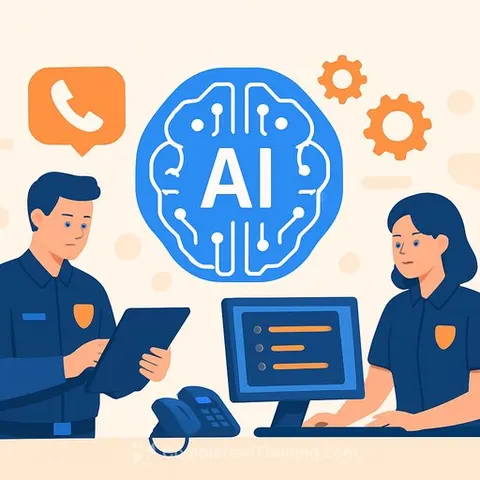
AT&T has released an upgraded management portal for its Next Generation 9-1-1 emergency communications platform, bringing dashboards, reporting, and administrative tools into a single streamlined interface. The move comes as public safety answering points (PSAPs) across the country explore how artificial intelligence can ease the strain on overworked call takers and dispatchers, even while many still operate on legacy infrastructure that was not built to support advanced AI applications.
Pressure mounts on emergency call centers
Emergencies are becoming more complex, and expectations for speed and accuracy are rising. Call takers must process more information, make faster decisions, and hold steady through high-stress moments-all while call volumes grow. That pressure is pushing PSAP leaders to look at practical AI tools that can reduce overload without adding complexity to life-or-death workflows.
Public safety leaders who work with AT&T say the right AI capabilities can surface critical information faster and help teams work more efficiently. The goal, they stress, is to augment trained professionals, not replace them.
AI transcription and translation in near real time
One of the clearest use cases is AI-enabled transcription. When a caller is describing an emergency, call takers are listening, typing, assessing, and prioritizing simultaneously. AI transcription generates near real-time text from live conversations, letting call takers and supervisors review what was said, confirm details, and use keyword tagging to pinpoint important information without replaying full recordings.
Translation is another area drawing strong interest. AI-powered voice and text translation can help PSAPs communicate faster with callers who speak another language, cutting delays when seconds count. Combined with transcription, the capability lets responders review calls in both English and the caller's spoken language. These capabilities, mirroring many of the skills taught in Speech-To-Text AI Courses and AI Translation Courses, show how language-processing AI is finding urgent, real-world application inside emergency centers.
Managing call floods with administrative AI
PSAP leaders also face surges when a single event triggers a wave of duplicate calls. During those spikes, trained personnel can get tied up managing traffic instead of reaching people who need immediate help. To reduce that congestion, some centers are turning to administrative AI interactive voice response (IVR) for non-emergency call triage.
With administrative IVR, callers inside a geofenced area tied to an active incident hear a message that the PSAP is already aware and coordinating with first responders. The system informs-it does not restrict. Callers always retain the ability to reach a live call taker, and the design accounts for overlapping incidents in the same area. The result, AT&T says, is less strain on staff and more attention reserved for the most urgent situations.
Modernization paves the way for advanced tools
None of these AI capabilities work without modern infrastructure. The ongoing transition to Next Generation 9-1-1 (NG9-1-1)-a move from legacy analog systems to IP- and cloud-based platforms-gives PSAPs the flexible foundation needed to adopt transcription, translation, and other AI-powered tools. NG9-1-1 also supports text-to-911, video, and improved location accuracy.
The upgraded AT&T ESInet portal is part of that modernization push. It consolidates dashboards and administrative controls, which the company says helps reduce complexity and supports more efficient daily operations. The upgrade was shaped by direct feedback from PSAP leaders who wanted fewer silos and a clearer view of their systems.
Why this matters for PR and communications
For communications professionals, the thread running through this story is straightforward: organizations that adopt AI most effectively are the ones that first invest in the infrastructure to support it. The 911 example also underscores a broader public-safety communication trend-real-time transcription and translation are moving from experimental to operational, and communicators across industries should pay attention to how these tools manage information under extreme pressure. Understanding their practical limits and capabilities, much like the material covered in specialized AI courses, helps PR teams advise on messaging, manage crisis response, and anticipate where public expectations about speed and accuracy will head next.