
AI news ·
English professor bans generative AI in creative writing classes
Professor Ian Stansel banned AI in all his creative writing classes, treating it as plagiarism. He relies on 20 years of teaching experience to spot generated text.
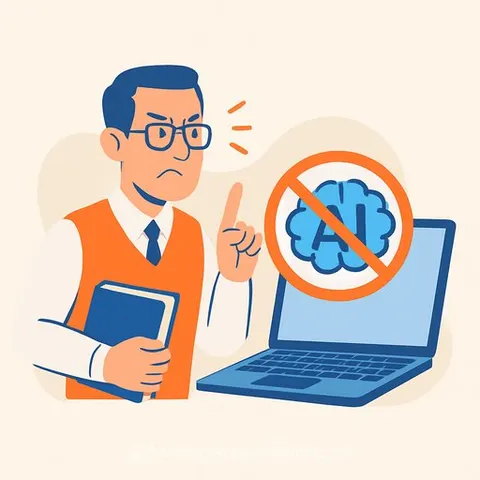
Ian Stansel, who teaches creative writing from the introductory to the graduate level, has banned Generative AI in all his classes. The policy, posted in his syllabi, classifies AI-generated text as a form of plagiarism when students present it as their own original work. His decision followed semesters of spotting submissions that read less like human undergraduates and more like software output.
The policy and its enforcement
Stansel's AI policy is direct: "The use of AI tools for any part of an assignment's completion is prohibited. Any suspected use of AI will be reported to the English Department and to the College of Arts and Sciences." The rule applies to screenwriting, fiction, and general creative writing courses, from 200-level workshops to advanced 600-level seminars.
He leans on two decades of teaching to spot work that does not belong to a student. "I've been doing this for 20 years," he said. "I sort of understand the usual spectrum of undergraduate writing." When a piece lands outside that spectrum, it can either signal exceptional talent or an AI assist. Stansel looks for tells: repetitive sentence structures, a pattern of pairing two adjectives with one noun, and tidy moral-of-the-story endings that the prompt never asked for. He uses AI-detection software sparingly, trusting his own judgment more.
Writing as partnership
Stansel describes creative writing as a contract between writer and reader. "The writer gives the reader the tools and materials they need to then complete the work within their imagination," he said. That transaction, he believes, is personal: readers are "communing with the creator or creators of that art." When AI produces the words, the connection breaks. The reader is no longer in conversation with the human who lived the experiences behind the piece.
"I really believe that readers, viewers and listeners of art… even if they would never think of it this way, I believe what they are doing is communing with the creator or creators of that art," he said.
For writers weighing the role of AI in their own work, resources such as AI for Writers explore both the capabilities and the ethical edges of these tools. Stansel's classroom ban is one point on a continuum many working writers are navigating.
What the workshop teaches
His classes pull students into a workshop model that predates the AI boom. Small groups read one another's work and offer feedback. Stansel estimates that 95% of students leave a workshop session encouraged and ready to improve the next draft. That process, he argues, loses meaning if the work under discussion is not the student's own. "I don't know how that would feel, to have [AI-generated] work discussed as if it was my own," he said. "I don't think it would feel very good."
Why this matters for writers
Stansel's stance highlights a tension that extends far beyond the campus. As AI tools grow more capable, the definition of authorship and the trust between writer and reader face pressure. For professional writers, the takeaway is practical: your byline is a promise of authenticity. Leaning on AI to generate work under your name can erode that promise in ways that damage the craft-and the career-long after the draft is turned in.