
AI news ·
English proficiency grows more critical for Filipino workers as AI reshapes global workplaces, employers say
90% of employers worldwide say English is critical to organizational success, up sharply from five years ago. 81% say AI adoption is making English proficiency more necessary, not less.
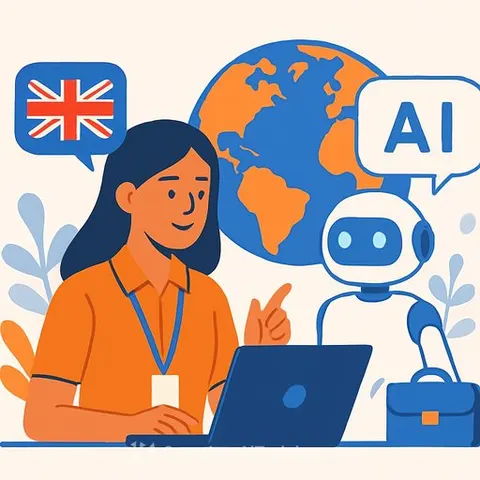
English Skills Now Essential for Workplace Success, Employer Data Shows
The Philippines is strengthening foundational literacy as part of its National Education Plan 2026-2035. A new report from the Educational Testing Service reveals why that foundation must now extend to English proficiency: 90 percent of employers worldwide say English is critical to organizational success, and 92 percent say it matters more than it did five years ago.
These figures come from the Toeic Global English Skills Report, which surveyed employers across 17 countries about language requirements in their workforce.
AI is intensifying the demand for English
Eighty-one percent of employers say integrating AI tools is increasing the need for English proficiency. Nine in 10 say English skills are necessary to use AI interfaces, generate prompts, and evaluate outputs.
The catch: AI is not filling the gap. About six in 10 employers say AI cannot compensate for weak English fundamentals. Technology is amplifying the need for strong communication, not replacing it.
Many AI-powered tools, digital platforms, and professional resources operate primarily in English. Employees navigate software interfaces, interpret technical documentation, and craft prompts as part of routine work.
How employers are assessing language skills
Seventy-eight percent of employers use English assessments during recruitment. Seventy-one percent use them for pre-training evaluation, and 66 percent for promotion decisions.
Organizations are adopting structured approaches to measure and develop communication skills. Language assessments allow companies to identify skill gaps and design targeted training that matches real-world communication demands.
What this means for education and workforce planning
Strengthening foundational literacy remains a priority. But education systems must now connect that foundation to practical communication skills that enable students to engage with global content and technology.
This is not about diminishing Filipino or mother-tongue instruction. It is about developing additional language skills that expand access to global knowledge, opportunities, and networks.
Sectors such as IT-BPO, global services, and tourism already depend on cross-border communication. As these industries adopt AI-enabled tools and serve international markets, English proficiency directly affects service quality, productivity, and career mobility.
For policymakers, the task is ensuring language education supports both early literacy and the gradual development of skills for engaging with global technologies. For employers, the responsibility is investing in continuous language learning as part of broader workforce upskilling in an AI-driven economy.
Learn more about AI for Education and AI for PR & Communications to understand how these shifts affect your organization.