
AI news ·
Enterprises shift from cloud-only AI to distributed hybrid models, says AMD India MD
Companies are shifting AI workloads from cloud servers to employee PCs, edge systems, and data centres to cut costs and keep sensitive data local. AMD says on-device AI can save staff up to seven work weeks per year.
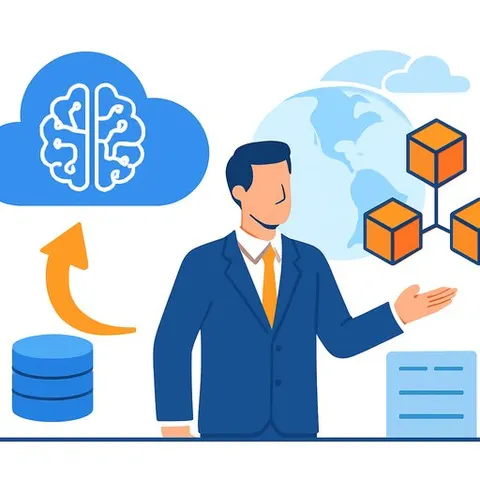
Enterprises are moving AI workloads off the cloud and onto employee devices
As companies move beyond AI pilots to production deployments, they are distributing artificial intelligence across cloud data centres, edge systems, and employee PCs rather than centralising everything in the cloud. Vinay Sinha, managing director of India sales at AMD, said this shift reflects practical constraints around performance, cost, security, and data control that cloud-only models cannot solve at scale.
The change is being enabled by neural processing units (NPUs) embedded in modern AI PCs. These chips allow tasks like real-time transcription, document summarisation, and contextual search to run directly on devices without sending data to external servers.
Where on-device AI delivers measurable returns
AMD-powered AI PCs are showing concrete productivity gains in enterprise settings. Organisations report saving up to seven work weeks per year in productivity time, achieving five times greater efficiency in workflows like email summarisation and document preparation, and enabling technical professionals to reduce task completion time by up to 81%.
The responsiveness advantage matters. When AI runs locally, users get immediate results rather than waiting for cloud round trips. The device continues working even when network connectivity drops.
Data stays closer to where it's generated
Processing sensitive information locally rather than transmitting it to cloud services reduces compliance and security risks. This approach is particularly valuable for finance, healthcare, and government sectors operating under strict regulatory requirements.
Local processing lowers the potential attack surface by reducing data movement across networks and multiple systems. It simplifies risk management by keeping sensitive operational data closer to its source.
This does not mean abandoning the cloud. The hybrid model reserves cloud infrastructure for large-scale model training, centralised data aggregation, and advanced analytics - tasks that benefit from concentrated computing power.
Edge AI handles real-time decisions
In latency-sensitive environments like industrial automation, retail operations, and video analytics, edge systems outperform cloud-dependent approaches. Milliseconds determine outcomes in autonomous systems and real-time decision-making scenarios.
Edge AI also reduces bandwidth requirements by processing data locally rather than transmitting it for analysis. Systems remain operational during connectivity gaps, which is critical for remote or unreliable network environments.
Cost reduction through workload placement
The practical approach is matching workloads to environments where they run most efficiently. Everyday AI tasks benefit from local execution because they require real-time interaction and happen frequently. Running them on devices reduces reliance on cloud-based AI services, helping organisations manage variable costs.
AMD PRO technologies add enterprise-grade security features including full system memory encryption, along with manageability tools and long-term platform stability for large-scale deployments.
India's enterprise AI shift
Indian enterprises are transitioning from AI experimentation to broader deployment, supported by a strong software ecosystem and growing focus on data sovereignty. Organisations need infrastructure supporting AI across multiple environments - cloud, data centres, edge systems, and employee PCs.
AMD is collaborating with OEM partners, software developers, and enterprise customers to ensure AI-capable systems align with actual business workloads and IT requirements. The focus is giving organisations flexibility to run workloads where performance, cost, and data control make the most sense.
For sales professionals, this shift has direct implications: your organisations are evaluating AI for Sales investments differently now, considering distributed architectures rather than cloud-only solutions. Understanding where workloads run most efficiently - and why - is becoming a core part of infrastructure conversations.