
AI news ·
Estonia puts OpenAI's AI platform at the center of its secondary school curriculum
Estonia is deploying a custom AI platform to all 20,000 upper secondary students in partnership with OpenAI. Half are already using it; the rest join this summer, with student data kept in Estonia and off-limits for model training.
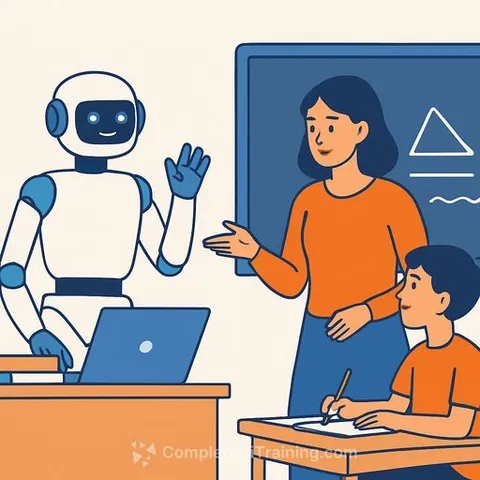
Estonia puts AI at the center of classrooms, not on the sidelines
Estonia is rolling out a customized artificial intelligence platform across its upper secondary schools in partnership with OpenAI, betting that students will learn better when trained to use generative AI rather than kept away from it.
Around half of Estonia's 20,000 upper secondary students are already using the new platform. The remainder are expected to join this summer, with vocational schools following during the next academic year.
Education and Research Minister Kristina Kallas said the approach reflects a simple reality: students are already using AI, so schools must teach them to use it well.
"If you regulate AI out of school, you're risking significant cognitive decline because the students will be using it anyway," Kallas said.
Why Estonia is different
The initiative stands apart from most European approaches, which focus on detecting AI-assisted cheating and restricting technology use. Estonia has taken the opposite direction.
Kallas, who also teaches at the University of Tartu, redesigned her own university assignments to integrate AI after realizing students were already outsourcing traditional coursework to generative AI. She concluded that blocking the technology was futile.
"The challenge is not how to keep AI out," she said. "The challenge is how to put AI into the learning process so that it accelerates and enhances cognitive growth rather than replacing thinking."
The minister compared AI to earlier disruptive technologies like calculators. Each initially provoked concern before becoming accepted classroom tools.
Foundations first
Kallas stressed that AI cannot replace foundational learning. Students must first build basic factual knowledge, literacy, numeracy, and social-emotional skills before the technology becomes useful.
"If you don't know your basic structure of knowledge, then you can't develop critical thinking," she said. "You have to know when the Second World War started - 1939 - because some things you just have to know by heart."
Her model blends traditional and digital methods. Students continue handwriting and note-taking for memory formation, while digital tools handle testing, feedback, and guided AI-assisted learning.
Data stays in Estonia
Under the agreement with OpenAI, student data entered into the platform remains under Estonian control and cannot be used to train the company's broader models.
Researchers will analyze anonymized usage patterns to study how students engage with AI - what they ask, how long they interact, whether they use it for deep discussion or superficial fact-checking. The findings will be published as part of a scientific study.
A broader European moment
Estonia's initiative is one of several European governments moving toward AI adoption in schools. Greece and Slovakia have also partnered with OpenAI to bring customized chatbots to classrooms.
Education ministers from all 27 EU countries are expected to adopt a position on AI in education this week, calling for "an ethical, safe and human-centred approach" that includes digital skills and AI literacy.
Other European governments are watching Estonia closely. Many countries are moving in the opposite direction by restricting smartphones or debating online age checks for social media. Kallas said education ministers across the bloc have shown strong interest in Estonia's model.
Screen time isn't the issue
The rollout comes as Europe debates excessive screen time among minors. Kallas argues policymakers are focused on the wrong metric.
"It's not about the amount of screen time," she said. "It's about the purpose, the pedagogical strategy behind the screen time."
Earlier digitalization efforts often failed because schools simply moved textbooks onto tablets without rethinking teaching methods. Estonia's approach requires schools to redesign instruction itself.
Kallas is also skeptical of broad technology bans. She said such measures tend to provoke resistance rather than compliance. Recalling her upbringing under Soviet rule, she noted that "everything was banned from us, so most of our days were spent figuring out how to avoid those bans."
For education professionals, the Estonia model offers a framework: embrace the tools your students are already using, but do so with clear pedagogical intent and strong safeguards around data. Learn more about AI for Education and ChatGPT Courses to understand how these tools work in practice.