
AI news ·
EUROCONTROL upgrades 25-year-old infrastructure with cloud platform to support AI air traffic tools
EUROCONTROL is replacing 25-year-old systems with a Red Hat OpenShift cloud platform to manage 12.4 million flights expected by 2031. The upgrade cuts multi-day data processing to minutes and lays the groundwork for AI-assisted traffic routing.
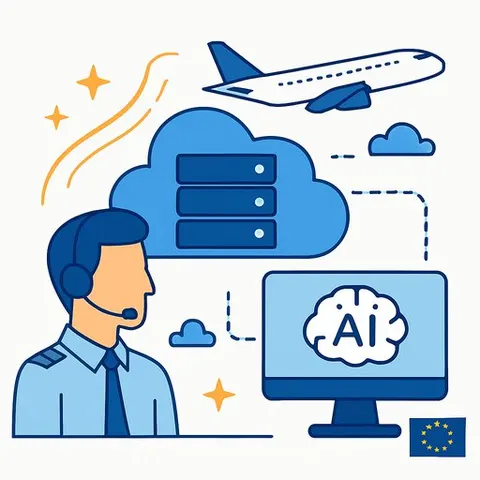
EUROCONTROL replaces 25-year-old systems with cloud platform to handle rising air traffic
EUROCONTROL, which manages air traffic across 42 European states, is moving its aging technology infrastructure to a modern cloud platform built on Red Hat's OpenShift. The shift addresses a critical bottleneck: the organisation handled 11.12 million flights in 2025 and expects that number to reach 12.4 million by 2031.
The current systems, some dating back 25 years, cannot efficiently process the operational and routing data required to manage that growth. A unified cloud environment will let EUROCONTROL scale capacity up or down based on real-time traffic levels and process data that previously took days to analyse in minutes.
Antonio Licu, Head of Technology Division at EUROCONTROL, said the move will "improve the ability of the network to safely and efficiently scale capacity up or down depending on the growth or decline of air traffic."
What the modernisation enables
The new platform creates the foundation for AI-assisted automation in air traffic management. EUROCONTROL plans to replace fragmented data systems with a single environment where machine learning tools can identify fuel-efficient flight paths, predict congestion before it develops, and recommend reroutes around weather or disruption.
- Real-time data analysis instead of multi-day processing cycles
- Automatic scaling to handle traffic surges across Europe's airspace
- Faster deployment of new operational tools and software updates
- Unified data sharing between airlines, airports, and air navigation providers
- Greater operational resilience during disruptions
- Full transparency and control over critical infrastructure (digital sovereignty)
The platform also modernises specific systems. EUROCONTROL is replacing its NOTAM (Notices to Airmen) and aeronautical data systems as part of the broader overhaul.
The AI layer: decision support, not replacement
Future AI tools will not replace human air traffic controllers. Instead, they will act as a decision-support system processing operational complexity at scale - identifying emerging bottlenecks, highlighting potential conflicts earlier, and modelling the downstream impact of delays across Europe's interconnected airspace.
For airlines, this means lower fuel burn, shorter routings, and faster recovery from disruptions. For the network, it means handling more traffic safely within existing airspace.
As flight volumes continue rising and airspace becomes more congested, the ability to process and act on live operational data in near real time will become essential to European aviation's future.
AI for Management professionals overseeing critical infrastructure projects should note how EUROCONTROL's approach prioritises operational control and safety within Europe's regulatory framework rather than pursuing full automation.