European firms hit the hiring brakes: what HR needs to do now
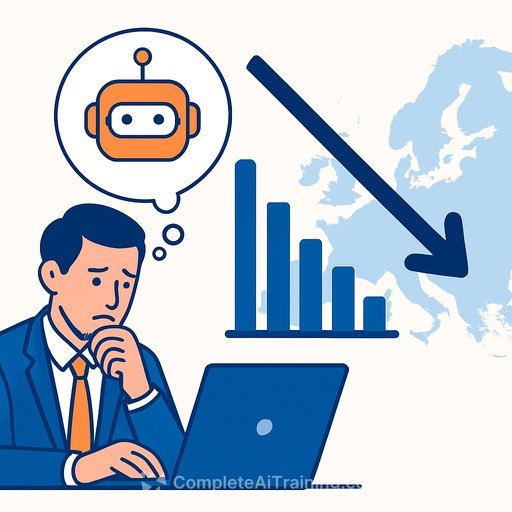
Hiring across Europe is slowing. The mix of weaker industrial output, softer wage growth, and anxiety over AI is cooling job moves and pushing both employers and employees into caution.
The era of easy hiring and rapid exits is over. This is a tighter, more selective market where every headcount decision needs a business case.
From leverage to hesitation
During the pandemic, furlough schemes like Germany's Kurzarbeit kept people on payrolls, remote work expanded options, and workers had rare leverage. Many considered quitting, burnout spiked, and "quiet quitting" entered the vocabulary.
That leverage has faded. Fewer vacancies and a tougher backdrop mean people are more reluctant to switch, and companies are slower to open new reqs.
The numbers HR should watch
- Eurozone employment growth is projected at 0.6% this year and 0.7% next year. A 0.1 percentage point swing equals roughly 163,000 jobs fewer or more. See European Central Bank projections.
- Three years ago, the eurozone added about 2.76 million jobs on 1.7% growth. That pace has slowed.
- Migration, which helped ease shortages, is stabilizing or declining in several countries.
- Germany: more than one in three firms plan job cuts this year. France's unemployment is expected to edge up toward 7.8%. UK unemployment could climb toward 5.5% from 5.1%.
- Poland ticked up to 5.6% unemployment in November from 5% a year earlier. Romania and the Czech Republic show similar increases.
- Manufacturing is under pressure: high energy costs, softer exports, and tough China competition have removed 120,000 industrial roles in Germany alone, with similar strains in France, Italy, and Poland.
- The eurozone Manufacturing PMI slipped to 48.8 in December, signaling contraction. Most firms aim to hold steady or get slightly leaner, not expand.
Where demand persists
Shortages have narrowed to specific domains. Retail, health care, logistics, engineering, and highly specialized technical roles still see consistent demand.
Hiring hasn't stopped. It's just more selective. Candidates with clear, relevant skills move faster; generalists face longer cycles.
The AI effect: fear, friction, and new work
Europe has adopted AI more slowly than the US and China, but concern is high. A large share of workers believe AI could put their role at risk and reduce headcount needs.
In Germany, projections suggest up to 1.6 million jobs could change substantially or be displaced by 2040, with tech creating roughly 110,000 new roles. See Germany's Institute for Employment Research (IAB).
Expect change, not a vacuum. Many repetitive tasks will move to software. Work that relies on judgment, relationships, compliance, safety, and ambiguity should remain in human hands - but the task mix inside those jobs will shift.
HR playbook for 2024
- Prioritize high-impact roles. Freeze "nice to have" reqs. Map roles to revenue, risk, and customer outcomes. Fund what moves the needle in 90 days.
- Stand up internal mobility. Build a live skills inventory. Post roles internally first. Make lateral moves normal to protect institutional knowledge.
- Invest in AI literacy and role-specific upskilling. Teach prompt fluency, data awareness, and workflow automation across teams. See curated options for teams at Complete AI Training - courses by job.
- Design jobs into tasks. Break roles into units of work. Automate low-value steps, then rebuild jobs around judgment, client contact, and oversight.
- Hire for skills, not proxies. Use structured interviews and work samples. Reduce reliance on pedigree. Bias toward demonstrated capability.
- Balance your workforce mix. Blend permanent staff with contractors, part-time options, and job sharing to keep experience while managing cost.
- Get ahead of "career cushioning." Assume employees are prepping plan B. Increase manager check-ins, internal gigs, and clear growth paths to keep your best people.
- Modernize your manufacturing talent brand. Graduates are wary of legacy auto and heavy industry. Lead with EV, robotics, software, and sustainability projects. Offer micro-internships and rotational programs.
- Track weekly signals. Use Research-informed metrics: vacancies by skill cluster, time-to-fill, internal transfer rate, training uptake, percent of tasks automated per team, voluntary exits vs. layoffs, and offer acceptance rates.
Tactics for selective hiring
- Shorten cycles. Two rounds, one work test, fast decisions. Top candidates won't linger.
- Comp swap flexibility. If you can't move base pay, use sign-ons, learning stipends, or 4-day week pilots to close gaps.
- Source from adjacent sectors. Logistics ↔ operations, retail ↔ customer success, manufacturing technicians ↔ field service.
- College hiring, reframed. Sell real projects, mentors, and speed to responsibility. Showcase tools and tech grads actually want to use.
Bottom line
This isn't 2021. It's a selective market with tighter budgets, focused growth, and real AI pressure.
Operate like a portfolio manager. Invest in skills that compound, de-risk with internal mobility, and be upfront about how AI will change work. Moving early beats reacting later.
Your membership also unlocks: