
AI news ·
Experts agree healthcare AI struggles because of infrastructure gaps, not algorithm failures
Most healthcare AI pilots fail not because the technology is flawed, but because organizations skip the infrastructure needed to support it. Data gaps, poor workflow fit, and weak governance sink even high-performing models.
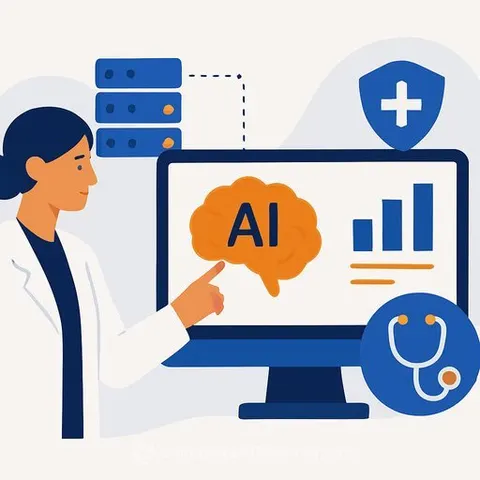
Healthcare AI Isn't Failing Because the Technology Is Broken
Healthcare organizations have developed or tested hundreds of AI solutions over the past several years. Many show strong technical performance. Few deliver meaningful clinical or operational impact.
The problem isn't the algorithms. It's the infrastructure around them.
Three healthcare experts published separate analyses this week that converge on the same conclusion: AI in healthcare fails when organizations focus on the visible technology-the models and interfaces-while neglecting the systems that make deployment possible.
The Infrastructure Gap
Health systems lack essential IT components needed to run AI at scale. Most organizations have invested in developing or piloting AI tools without building the foundational systems those tools require.
Data standardization, interoperability, governance, security, and workflow integration sit below the surface. When these elements are missing or underdeveloped, even advanced AI solutions struggle.
Models trained on clean, curated datasets encounter very different conditions in live environments. Inconsistent coding, incomplete records, and fragmented data sources degrade performance quickly. Organizations hit a wall not because the AI doesn't work, but because the system around it isn't ready.
The result is a healthcare landscape filled with isolated proofs of concept rather than sustained, system-wide tools that deliver value across an organization.
Workflow Discipline Determines Success
AI in healthcare fails when it's treated as a tool rather than a workflow.
When organizations first see an AI demonstration, excitement follows. Testing reveals strong initial results. But the focus rarely shifts to the end goal the technology should achieve. This continues until the tool meets the reality of everyday clinical work.
When that happens, output becomes inconsistent. The AI doesn't meet the requirements it was brought in to solve. Trust drops before the technology proves its value.
Implementation must align with actual clinical and operational requirements. Without that alignment, even capable AI systems fail to deliver.
What This Means for Healthcare Organizations
The gap between AI capability and AI impact isn't technical. It's organizational.
Health systems planning AI deployment should prioritize infrastructure investment alongside technology selection. Data architecture, governance frameworks, monitoring systems, and workflow integration determine whether an AI solution succeeds or becomes another abandoned pilot.
For professionals evaluating or implementing AI in healthcare, the question isn't whether the algorithm works. It's whether your organization has built the systems to support it.
Learn more about AI for Healthcare implementation and the AI Data Analysis practices that underpin successful deployments.