
AI news ·
Explicitly marketing products as AI reduces sales, WordPress VIP finds
Labeling products as AI-powered hurts sales, as 60% of consumers find the messaging a turnoff. Brands see better results when they drop the label and focus on outcomes.
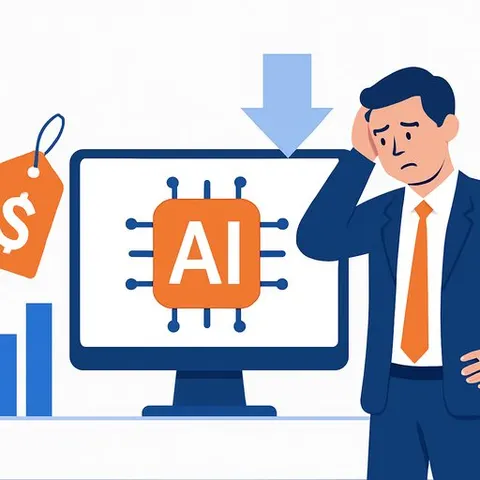
Explicitly labeling products as "AI-powered" is turning away buyers and hurting sales, according to new research from WordPress VIP. The findings show that even when AI features deliver real value, the marketing language around them can trigger consumer resistance-a warning for sales teams that rely on technology-driven pitches.
The AI Label Backlash
Brian Alvey, CTO of WordPress VIP, described a clear pattern he observed in product sales. "I actually saw people I know who have a product, where they have a pricing page, and the top two levels of the product have a lot of AI in it. They sold less," he said. "If they just took the word AI out and even left the feature in, it was no longer a turnoff, and they actually sold more of the middle and higher-level packages."
The company's Future of the Web survey found that 60% of consumers view AI in brand messaging as a turnoff. That skepticism is not abstract-it directly influences purchasing decisions. Products that removed AI references from their pricing pages saw better results than those that kept the same functionality but continued marketing it as AI.
Consumers Want Human Connection, Not AI Hype
The survey also revealed that 74% of consumers believe the internet feels less human than it did a decade ago, and the average person experiences bot fatigue after only 40 minutes online. Many enterprise marketers are prioritizing AI visibility, but the survey suggests that overt AI for Marketing messaging can actually reduce sales.
Alvey noted the tension brands face. "There's such a backlash right now. There's just a massive, massive turnoff," he said. "Brands have to be really, really careful how they walk this line. All their competitors are using it, so they have to use it too. It would be like not being on the internet."
Most consumers struggle to identify brands that are using AI effectively, and they increasingly associate machine-generated content with inauthenticity. The gap between what brands invest in and what buyers actually want is widening.
AI Search Brings Ready-to-Buy Visitors
While AI-generated answers are changing how people discover information, they are not replacing brand websites. The survey found that 60% of enterprises now see more traffic from AI search engines and answer platforms. However, 86% of consumers always or sometimes visit the original source after receiving an AI-generated response, and one-third identify the ability to click the original source as the most important signal of trust online.
These AI-referred visitors often arrive further along in the buying process. Alvey said, "If I'm a marketer, I'm okay with the fact that you're doing all your research on buying a car in the answer engine. As long as when you come to my site and you're 7 steps deeper in the buying process, then I'm good."
Yet many organizations remain underprepared. They allocate only 17% of future investments to owned websites, creating a poor experience for users who click through expecting depth and reassurance. If the website fails to deliver, trust gained through discoverability evaporates quickly.
Why this matters for Sales
The data challenges sales professionals to rethink how they position AI-driven offerings. The technology itself is not the problem-how you talk about it can be. For sales teams, AI for Sales tools can improve efficiency, but leading with the AI label may cost deals. The most effective approach is to highlight outcomes and value while letting the technology work quietly in the background.
Buyers who arrive from AI search results are often more informed and closer to a decision. Sales conversations that acknowledge this readiness and focus on trust, authenticity, and human expertise will convert better than those that double down on AI branding. In a market where 60% of consumers are turned off by AI messaging, the sales pitch that wins is the one that sounds the least like a machine.