
AI news ·
Family lawyers must adapt or lose clients to AI divorce tools, attorney argues
AI divorce tools are pulling clients away from traditional litigation, but they get 5 to 40 percent of cases wrong. Lawyers who offer affordable, human-centered alternatives still hold an edge where judgment and compromise matter most.
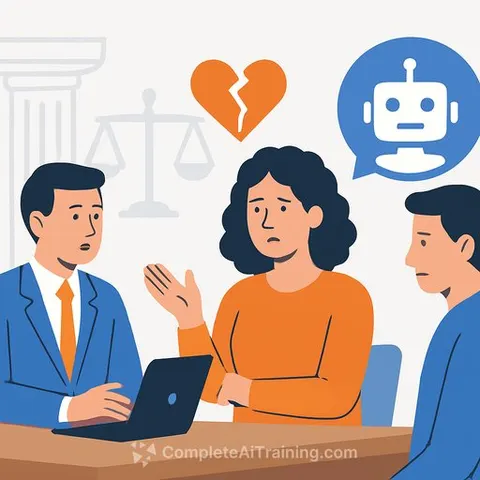
Family Law Faces Pressure From AI Divorce Tools-But Humans Still Have an Edge
Automated divorce platforms are filling a gap that traditional litigation created. Clients frustrated with high retainers, slow communication, and years-long court battles are turning to AI tools that promise streamlined, predictable costs. The problem: these systems get 5 to 40 percent of cases wrong, and lawyers who ignore them do so at their profession's peril.
The shift away from adversarial court proceedings is real across all client demographics-wealthy divorces, gray divorces, millennials, and minorities alike. They're rejecting a model that leaves families financially and emotionally exhausted.
AI platforms in development aim to bypass lawyers entirely. Clients push a button, file paperwork, and walk away-assuming both parties agree on everything. That assumption matters. Where human judgment remains essential is in the cases where agreement doesn't exist and creative problem-solving is required.
What Clients Actually Want
Ask divorcing clients if they'd pay large retainers with open-ended billing and wait months for updates. They won't. Ask if they'd prefer humans to handle their case for the same cost as an AI tool. They will.
People need more than algorithms during their most vulnerable moments. They need someone who can read a room, understand emotional complexity, and craft compromises tailored to a family's specific situation. Only humans do that work.
A Path Forward for Family Law
Family law practices can stay relevant by shifting toward human-centric, efficient alternatives to traditional litigation. A phased approach that integrates mediators, financial advisors, coaches, and private arbitrators provides emotional support and problem-solving that AI cannot match.
This model reduces the burden on attorneys. No endless discovery. No need for large physical offices. No risk of being pulled into protracted battles. Instead, lawyers help more clients and focus on what they do best: legal counsel.
The framework works virtually too. Attorneys can serve clients across jurisdictions without geographic constraints. For lawyers who burned out or moved into mediation to escape the courthouse, this approach offers a path back.
Practices built on dignity, neutrality, and rational compromise over adversarial combat can protect their business while delivering predictable outcomes. Clients might even say thank you at the end.
Learn more about AI for Legal professionals and how to adapt your skillset to these changes. For paralegals, an AI Learning Path for Paralegals covers automation in document review, contract analysis, and legal research-skills that support modernized family law practices.