
AI news ·
Free market approach favors AI mental health tools over preemptive regulation
Regulators restricting AI in mental health care risk limiting access for 1 billion people globally. US demand for behavioral health counselors will rise 17% by 2034.
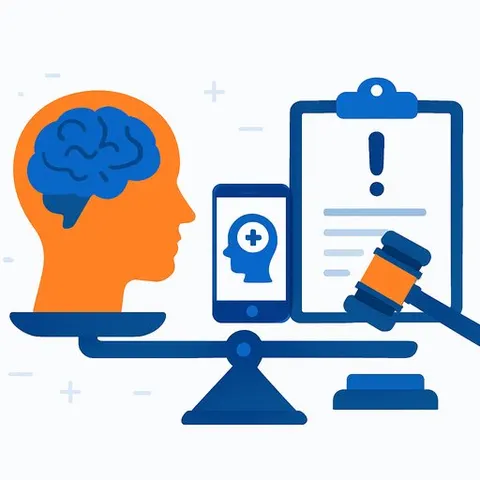
Lawmakers and regulators are moving to restrict artificial intelligence in mental health care over safety concerns. This regulatory push risks an overcorrection that could limit access for millions of patients facing a severe shortage of human clinicians.
The provider shortage and AI applications
The World Health Organization reports more than 1 billion people live with mental health disorders globally. The median number of mental health professionals is just 13 per 100,000 people, with severe deficits in low- and middle-income countries.
In the United States, the Bureau of Labor Statistics projects a 17 percent increase in demand for behavioral health counselors by 2034. High costs, local provider shortages, and licensing barriers make obtaining services difficult for many patients.
AI applications in mental health care fall into three main categories: personal sensing, natural language processing of clinical texts, and chatbots. Wellness and cognitive behavioral therapy tools like Woebot, Wysa, and Tess provide therapeutic techniques around the clock. Healthcare organizations exploring AI for Healthcare applications can use these tools to support patients between scheduled appointments.
Regulatory friction and market incentives
States like Vermont recently passed laws prohibiting certain AI uses in mental health services. Kyle Sepe, vice president of global competition and regulatory policy at the Computer & Communications Industry Association, said these definitions fail to distinguish non-clinical wellness tools from covered mental health uses.
This patchwork of state laws creates uncertainty for tech companies and could chill development in the therapeutic space. The Food and Drug Administration takes a different approach by using a risk-based framework that requires predetermined change control plans for generative models.
Adam Omary and Jennifer Huddleston at the Cato Institute wrote against policies that assume only negative outcomes. "We do not know how many lives generative AI has served by improving access to mental health care," they wrote. "But for every incidence of AI psychosis or suicide, there may be dozens of unobserved positive outcomes. Policy that presumes only the worst outcomes also prevents the best."
Clinician involvement and transparency
Market incentives already push companies to consult mental health professionals during development. Steve Duke, author of The Hemingway Report Substack, said 26 of 31 AI mental health products included documented clinician involvement in their creation.
Companies invest in explainable AI and clinical trials to build customer trust and differentiate their products. Regulators can support this balance by favoring clear disclosures and AI literacy over heavy mandates that increase development costs.
Why this matters for healthcare professionals
Clinicians face overwhelming patient loads and cannot manually scale their time to meet growing demand. AI tools offer a way to extend continuous care and handle routine cognitive behavioral exercises, provided they are built with clinical input and clear safety disclosures. Healthcare leaders should evaluate these tools based on their documented clinician involvement and evidence-based design rather than avoiding them entirely due to broad regulatory fears.