LINE's AI agents point to messaging apps becoming sales channels
Messaging apps are doing more than chats. In Asia, they've become places where people talk, pay, and buy. Now AI agents are taking over routine support and sales tasks inside those same threads. LINE Plus's new ActEngine AI shows how this shift looks in practice.
What ActEngine AI does
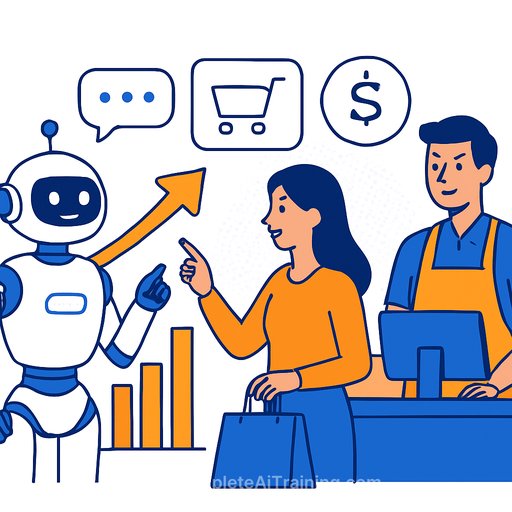
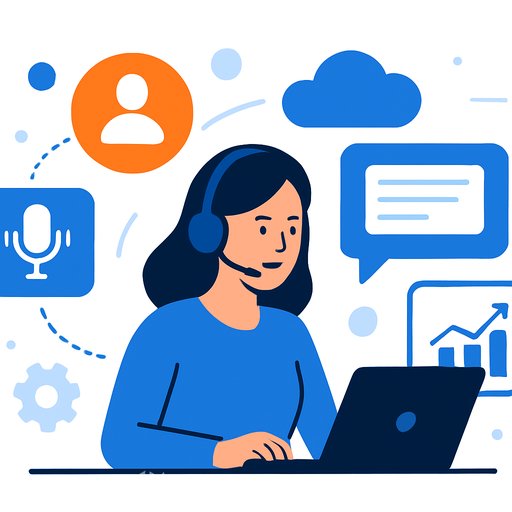
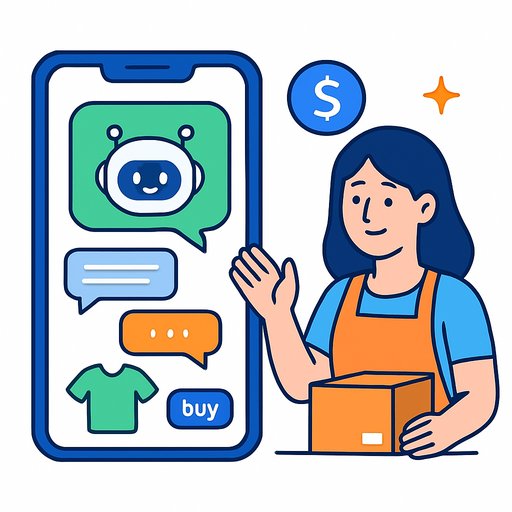
ActEngine AI gives businesses two agent types: a support agent and a sales agent. The support agent answers questions, resolves issues, and routes complex cases to humans through a central dashboard. The sales agent reads behavior signals and order history, then triggers targeted promotions through chat at the moment they're most likely to convert. Both run inside LINE, where conversations and transactions already happen.
Proof in Thailand: LINE MAN Wongnai
LINE MAN Wongnai operates a large delivery and services platform in Thailand, connecting consumers to more than 700,000 merchants. It's the first big rollout of ActEngine AI.
Results so far: the AI support agent handles about 360,000 merchant inquiries per year, cuts handling time by over 60%, and improves response accuracy by 16% compared with human agents. That level of automation takes meaningful weight off support teams while keeping quality consistent.
Why this matters for support and sales teams
Messaging is becoming an operational channel, not just a touchpoint. Customers can ask for help, receive an offer, and complete a purchase in one thread. For smaller merchants-roughly 80% of restaurants on LINE MAN Wongnai are run by one or two people-AI can keep conversations active without stealing hours from daily operations.
LINE Plus calls the proactive promo capability "Outbound Action." The system selects who to contact and when, based on signals like last order date, order frequency, and price sensitivity. That means fewer blanket blasts and more timely nudges.
Practical playbook to get started
- Define clear handoffs: let AI handle FAQs, status checks, refunds within policy, and reorders; escalate edge cases and VIPs to humans fast.
- Map data inputs: order history, recency/frequency, category prefs, and time-of-day response rates. Keep collection inside consent and platform rules.
- Stand up quick intents: delivery status, order modification, refund policy, store hours, payment issues. Add one new intent per week based on missed questions.
- Launch two promo triggers: lapsed buyers (no order in X days) and slow-hour boost (2-4 pm). Cap frequency and set quiet hours.
- Create tight offers: 10-15% off, free delivery thresholds, or combo bundles. Keep redemption in-chat to reduce drop-off.
- Write for chat: 1-2 short lines, one clear CTA, no jargon. Offer quick replies like "Track order," "Talk to support," "Apply discount."
- Train, then fine-tune: review 50-100 transcripts weekly, tag failure modes, and refine prompts, knowledge, and policies.
- Close the loop: pipe outcomes to CRM/POS so you can attribute revenue and resolve tickets fully.
Metrics to watch
- Support: first response time, average handle time, containment/deflection rate, CSAT, recontact rate, escalation rate, resolution accuracy.
- Sales: open and click rates, opt-out rate, conversion rate, incremental orders, average order value, promo cost per order, payback period.
- Quality and safety: false positive refunds, policy breaches prevented, brand-voice adherence, complaint rate.
What good looks like
- Contain 40-70% of routine tickets with no drop in CSAT.
- Reduce handle time by 50-60% on automated flows.
- Lift reorders 5-15% with targeted promos while keeping opt-outs under 1% per month.
Risks and guardrails
- Consent and compliance: honor opt-ins, provide easy opt-outs, and respect quiet hours.
- Offer integrity: validate eligibility before sending; prevent stackable discounts that kill margin.
- Escalation clarity: one-tap "Talk to a person." Timebox AI attempts before handing over.
- Knowledge freshness: sync policies, menus, fees, and hours daily to avoid wrong answers.
- Brand control: approved tone templates, message length limits, and banned phrases list.
Where this is heading
AI agents are moving from simple Q&A to owned outcomes: resolve the issue, save the sale, trigger the reorder. Messaging is the ideal surface because customers already live there and trust the flow. As more activity happens inside super-apps, expect tighter links between service, promotion, and checkout-all inside one thread.
For support and sales leaders, the play is simple: start in messaging, automate the obvious, prove the lift, then expand. The companies that treat chat as a full channel, not a side inbox, will win the next cycle of customer attention.
Your membership also unlocks: