
AI news ·
From Copilots to Agents: AI-Driven Development Comes of Age
AI trims the busywork, injects intelligence into the codebase, and tightens feedback loops. Teams ship faster, fix issues earlier, and spend more time on real problems.
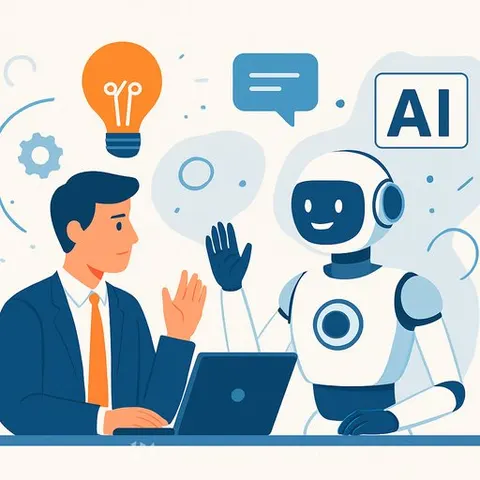
The AI-Driven Evolution of Software Development
Traditional delivery cycles weren't built for constant change. Teams ship slower, pay more in maintenance and struggle to meet rising expectations from the business.
AI changes the workflow. It removes busywork, brings intelligence into the codebase and makes apps adaptive from day one. The result: fewer bottlenecks, tighter feedback loops and more time for actual problem solving.
How AI Lands in the Stack
AI-native coding goes beyond autocomplete. Models learn your codebase patterns, suggest better structures and surface issues before review. ML services plug in for real-time decisions, while agents watch systems and act without hand-holding.
Consider AI pair programming. Tools like GitHub Copilot provide real-time suggestions and reduce repetitive coding. In a study by GitHub, developers completed tasks up to 55% faster with higher satisfaction using Copilot. Read the study.
Key Gains for Engineering Teams
- Faster delivery: Automated code generation, early error detection and smart optimizations shorten cycle time.
- Better DevEx: Guided authoring, refactoring, merging and test creation reduce cognitive load and context switching.
- Higher code quality: AI testing flags vulnerabilities, suggests fixes and lowers post-release incidents.
- Agentic operations: Autonomous agents self-tune workflows, handle failures proactively and keep services steady.
- Predictive maintenance: Performance signals forecast failures so teams fix issues before users feel them.
- Efficient spend: Dynamic resource allocation matches demand and trims waste across environments.
- Actionable insights: Analytics guide product bets, backlog priority and architectural decisions.
- Language shift: Adoption of Rust and Go grows for performance, safety and scalability-especially in cloud and microservices.
Where It Already Works
- Public sector: Chatbots handle routine requests; analytics surface trends to inform policy and service design.
- Financial services: Real-time fraud detection and risk scoring across large streams of transactional data.
- Healthcare: Applications that analyze clinical data, forecast outcomes and support diagnosis and treatment plans.
- Telecommunications: Network issue prediction, automated support and personalized plan recommendations.
- Information technology: Automated code review, issue detection and suggested remediations for faster, safer releases.
- Energy and utilities: Demand forecasting, load management and efficient integration of renewables.
Practical Adoption Playbook
- Pick a pilot: Start with one repo or service that has clear pain (bug backlog, slow PRs, flaky tests).
- Instrument everything: Track lead time, review duration, incident rate, MTTR and infra cost before/after.
- Set guardrails: Enforce policy checks, secret scanning, SAST/DAST and model usage limits in CI.
- Secure data: Define prompts, PII handling and retention rules. Use private models when needed.
- Choose the right models: Pair a code assistant with test-generation and a small agent for ops automation.
- Ship small, iterate: Weekly evaluations, human-in-the-loop reviews and gradual expansion to other services.
- Upskill the team: Short playbooks for prompting, review checklists and patterns for safe refactors.
The Language Shift
Rust brings memory safety and performance without a GC. Go keeps concurrency simple with a lean toolchain for cloud services. AI assistants lower the entry cost for both, but code reviews, property-based tests and benchmarks still decide what ships.
What This Means for Your Roadmap
AI in software development is past the hype cycle-it's table stakes for teams that need speed and reliability. Companies adopting AI-driven workflows report faster projects, better quality and leaner operations.
AI isn't replacing developers. It's an amplifier for your team's impact. Offload the repetitive work, keep humans on the hard problems and ship software that adapts as requirements change.
Want a practical overview of coding assistants and where they fit? Explore curated tools for generative code here: Generative Coding Tools.