
AI news ·
Fujitsu develops multi-AI agent system that learns and updates itself from operational results and human feedback
Fujitsu developed AI agents that identify their own failures and improve without specialists manually rewriting rules. Testing showed a 28-point accuracy gain, with agents adapting to regulatory and operational changes on their own.
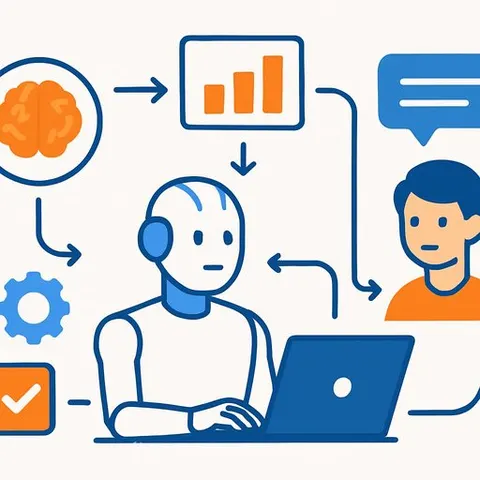
Fujitsu's AI Agents Learn and Adapt Without Constant Human Rewiring
Fujitsu announced a self-evolving multi-AI agent technology that allows AI systems to identify their own failures, extract lessons from them, and improve their performance without experts manually rewriting prompts and rules each time business conditions change.
The technology addresses a core problem in enterprise AI: conventional AI agents follow instructions well but struggle to learn independently when they fail. When companies update policies, legal requirements shift, or operational rules change, someone has to manually adjust how the AI searches for information, evaluates options, and makes decisions. This creates constant work for specialists.
Fujitsu's system changes that dynamic. Multiple AI agents work as a team, analyzing why they succeeded or failed at a task, then proposing and testing improvements to their own logic. The system verifies whether proposed changes actually work before applying them to live operations.
Results in two business areas
Fujitsu tested the technology on two practical problems:
- Optimizing business-specific language models: The company applied the system to Takane, its generative AI and LLM platform, across manufacturing, healthcare, finance, and public administration. The AI agents autonomously selected training data, adjusted learning conditions, and evaluated results-work that normally requires specialist judgment. After running through actual business operations, the system achieved a 28-point average accuracy improvement compared to before specialization. In healthcare, the system learned to extract diagnostic names, treatment stages, and policies from medical records in consistent formats without manual specification of those patterns.
- Searching design documents in large systems: When Fujitsu's electronic health record system or government solutions need changes due to new regulations, engineers must identify which design documents are affected-a task requiring deep knowledge of regulations, business processes, and system architecture. The AI agents learned from past searches and human corrections, improving their ability to expand search scope and extract relevant documents. They began mimicking expert techniques, like checking related documents and avoiding false exclusions based on domain knowledge.
What this means for development teams
The system reduces dependency on AI specialists for routine optimization work. Teams can build and continuously improve AI agents and automation systems tailored to their operations without heavy reliance on prompt engineers or machine learning experts to maintain them.
Fujitsu plans to integrate the technology into its AI platform and offer it as part of the Kozuchi AI platform. The company is also working with Carnegie Mellon University researchers to reduce the memory and processing power required, making the system viable for on-premises and edge environments-not just cloud deployments.
The broader aim is to address staffing shortages in specialized roles and help organizations adapt faster to regulatory changes and operational shifts without waiting for expert intervention.