
AI news ·
Future factories need supply chain resilience to meet shifting public health demands
Healthcare manufacturers need to predict supply chain breaks before they happen-delays in diagnostic equipment or medical supplies carry direct consequences. Factories that lack real-time supplier visibility are the most exposed when disruptions hit.
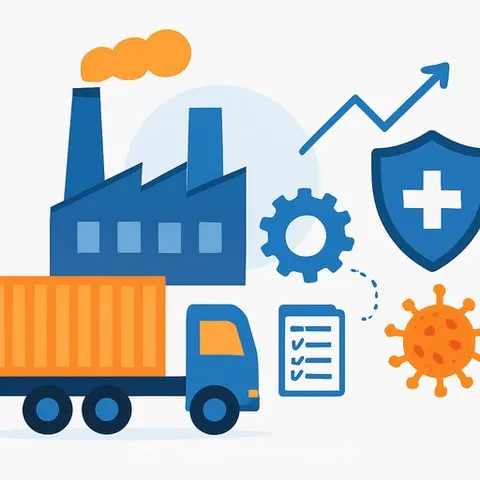
Factories Need to Predict Supply Chain Breaks Before They Happen
Manufacturing facilities must build the ability to foresee supply chain disruptions and respond quickly to shifts in demand. This capability has become essential for operations that serve healthcare markets, where production delays can have direct consequences.
The stakes are particularly high in healthcare manufacturing. A disruption that might cause inconvenience in other sectors can delay critical supplies-from diagnostic equipment to pharmaceutical ingredients to medical devices.
What Production Resilience Requires
Resilient factories operate on two fronts: visibility and agility. They need systems that detect problems before they cascade through supply chains. They also need the flexibility to shift production priorities when public health needs change.
For healthcare manufacturers, this means monitoring suppliers multiple tiers deep, not just immediate vendors. It means understanding which inputs are single-source risks and which have viable alternatives.
The Operational Reality
Building this capability requires investment in data infrastructure and decision-making tools. AI for operations can help facilities track supplier performance, inventory levels, and demand signals in real time.
Automation and intelligent systems also enable faster response when disruptions occur. AI Agents & Automation can help manufacturing teams adjust production schedules, source alternative materials, or reroute shipments without the delays that manual processes introduce.
Healthcare operations teams should assess their current visibility into supply chain risks and identify where they lack real-time data. The factories that survive the next disruption will be those that saw it coming.