AI RevOps Is About to Reshape Your Entire Revenue Org: Inside the Rise of Agentic AI Revenue Teams
Most funnels leak. You patch one hole and another opens. AI has helped at the edges, but the core system hasn't changed yet. That shift is next.
By 2030, autonomous agents will run a big share of digital interactions. Cisco expects about 68% of service workflows to be automated by 2028, and sales and marketing are close behind. Capgemini estimates agents could create roughly $450B in value. Gong reports teams using AI generate 77% more revenue per rep. Adoption is exploding, but results lag where strategy and operating models are missing.
The Shift to Agentic Revenue Teams (2025 → 2030)
Most teams still treat AI like a clever intern: helps draft, helps summarize, helps score. The real shift is agents running entire workflows end-to-end. Early adopters already see hard gains as they commit to autonomy, not just assistance.
Salesforce found full AI implementation jumping from 11% to 42% in a year. MarketsandMarkets reports 25-30% sales performance lifts for teams that go beyond pilots. The 2030 org is smaller, faster, and clearer because agents absorb operational noise. Humans point the ship; agents keep it moving 24/7.
The Structure of the 2030 Revenue Engine
- Sales pods: Human AEs paired with AI SDRs for research, outreach, qualification, and CRM upkeep.
- Forecasting agent: Live pipeline accuracy instead of weekly debate.
- Marketing pods: A creative lead with content and journey agents running constant experiments and hyper-personalization.
- RevOps hub: Supervises agents for routing, scoring, territory logic, compensation modeling, and data hygiene.
Two enablers make this work: a shared memory across sales, marketing, and CS, and continuous optimization. Agents test and tune non-stop. Humans set direction, review exceptions, and make the calls machines can't.
The Division of Labor: What Agents Handle vs What Humans Own
Agents take over work people were never hired to do in the first place. Humans keep the judgment, creativity, and politics.
- Agents handle: Prospecting and intent mining, multichannel outreach, CRM enrichment, real-time forecasting and scenario modeling, deal-risk scoring, standard pricing approvals, early lifecycle and retention triggers.
- Humans own: Complex negotiations, multi-stakeholder alignment, narrative and category creation, pattern-sensing when data "looks fine" but feels off, and coaching the agents themselves.
Rhythm: AI proposes → humans adjust → AI executes → humans oversee. Finally, a healthy split.
AI RevOps and Sales in 2030: AI-Driven, Human-Enhanced
The classic prospect → qualify → pitch → negotiate cadence is being rebuilt. Prep work gets automated, so selling gets human again.
Platforms like Outreach and SuperAGI show early AI SDRs that research, write, follow up, and keep context. By 2030, this isn't a differentiator. It's table stakes.
- AI SDRs: Build and refresh lists, run thoughtful multichannel outreach, qualify via signals, schedule meetings, and keep the record clean.
- AEs: Spend time on strategy, stakeholder dynamics, custom value stories, and closing.
The Other Customer: Machine Buyers
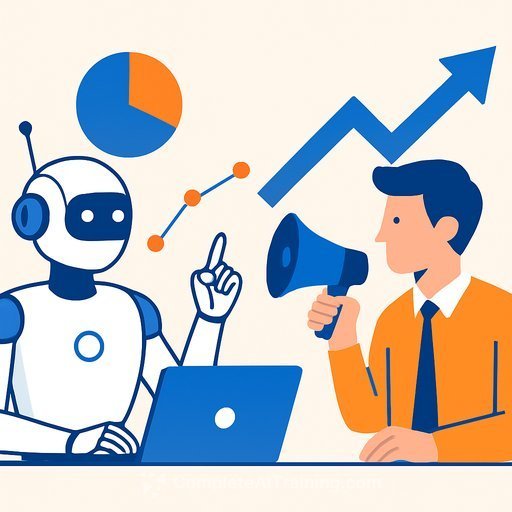
By 2030, you'll sell through and sometimes to machine customers: procurement bots, buyer-side agents, automated evaluators. They don't react to clever copy. They prefer clean docs, structured product data, transparent pricing, and clear SLAs.
- Flag "non-human leads" and route them differently.
- Maintain AI-readable content and structured product specs.
- Make pricing and packaging radically consistent.
This is where GEO (Generative Engine Optimization) joins SEO. If agents can't parse your content, you don't exist to them.
AI RevOps & Marketing in 2030: Autonomous Growth Systems
Marketing hasn't seen the lift it expected yet. Capgemini reports only 7% say AI improved effectiveness, and just 18% feel good about personalization. That's a stack problem. Data isn't unified. Nothing shares a memory, so models guess.
AI RevOps fixes the foundation. Once data, logic, and workflows align, the marketing engine becomes an always-on lab.
- Content agents spin variants and test automatically.
- Journey agents adjust timing and messaging based on live engagement.
- Budget agents shift spend as channels surge or stall.
- Segmentation agents rebuild audiences daily, sometimes hourly.
Retention improves too. Agents track sentiment, usage, and friction, kicking off plays before churn risk becomes visible to humans.
AI RevOps & Strategy in 2030: The Control Tower
RevOps evolves from tool ownership to behavior governance. Someone has to keep the swarm aligned.
- Lead routing, qualification thresholds, and SLA enforcement.
- Territory and coverage models.
- Forecasting and scenario planning.
- Deal-risk scoring and escalation logic.
- Data quality and system hygiene.
Data integrity is the main blocker. Gartner warns that 40%+ of agentic AI projects will fail by 2027 due to bad data, unclear ownership, and weak guardrails. RevOps prevents this: set rules, check logs, tune thresholds, and stop runaway discounts or messy renewals.
The Operating Model for Agentic Revenue Teams
You don't "install" autonomy. You build an environment where it behaves.
Step 1: Governance
- Give each agent a job description: scope, tools it can call, escalation paths, and human handoffs.
- Build observability before scale: monitoring, audit logs, approval flows, and rollback plans.
- Write down ethics and escalation rules. Human override is default safety gear.
Step 2: Reskilling Revenue Teams
- AI literacy and agent orchestration: shaping tasks, setting guardrails, debugging behavior.
- Data storytelling: explain what agents did and why it made sense.
- Experiment design: run fewer, smarter tests with clear success criteria.
- Cross-functional CX alignment.
- CMO-CIO collaboration on budgets, data, and platforms.
Step 3: Long-Term Roadmap
- Phase 1 - Preparation: Clean data, unify profiles, pilot a few specialist agents (e.g., churn detection, forecasting). Test copilots where trust is low risk.
- Phase 2 - Scaling: Stand up AI RevOps as a control tower. Orchestrate workflows end-to-end. Add guardrails, monitoring, and escalation protocols. Practice blended workforce management (clear handoffs between people and agents).
- Phase 3 - Optimization: Share memory across agents. Rebuild processes for human and machine buyers. Shift human roles toward strategy, creativity, and relationships. Continuously tune governance and data quality.
Metrics That Matter
- AI-qualified meeting rate and speed to first touch.
- Win rate and cycle time by agent involvement level.
- Forecast accuracy delta vs. last quarter.
- Data exception rate and time-to-fix.
- Retention risk alerts-to-saves ratio.
- Discount approval time and average concession by segment.
Common Pitfalls (and Simple Guardrails)
- Messy data: Define golden customer records and enforce them. No record, no action.
- Agent sprawl: Cap the number of agents until you have monitoring and shared memory.
- No human in the loop: Require approvals for pricing, legal, and high-risk outreach.
- Opaque logic: Keep decision logs and rationale summaries for audits and coaching.
- Incentive mismatches: Align agent goals to revenue outcomes, not vanity metrics.
Your 30-60-90 Day Starter Plan
- Days 1-30: Data audit, define agent job descriptions, pick one sales and one marketing workflow to pilot. Set success metrics and failure thresholds.
- Days 31-60: Launch an AI SDR on a narrow segment. Add monitoring, human approvals, and rollback. Stand up a forecasting agent in "shadow mode."
- Days 61-90: Expand to a content agent and a journey agent. Launch RevOps dashboards for routing, risk, and hygiene. Train managers on agent coaching.
Why This Matters
By 2030, agents will run the bulk of routine workflows. Not because people can't, but because their time is better spent negotiating, building trust, and creating new value. The competitive gap won't be about who "uses AI." It will be about who builds a stable operating model for AI in RevOps.
If you're planning next steps, start with skills. Practical training on agent orchestration, data, and measurement will save months of trial and error. Explore role-specific learning paths: AI Learning Path for Sales Managers and the AI Learning Path for Vice Presidents of Marketing. For marketing teams looking for focused resources, see AI for Marketing.
Sources worth skimming
Your membership also unlocks: