
AI news ·
Hartford HealthCare integrates PatientGPT into patient portal for AI health guidance with clinical oversight
Hartford HealthCare integrated PatientGPT into its electronic health record to provide secure, governed health guidance. It currently serves 40,000 active users.
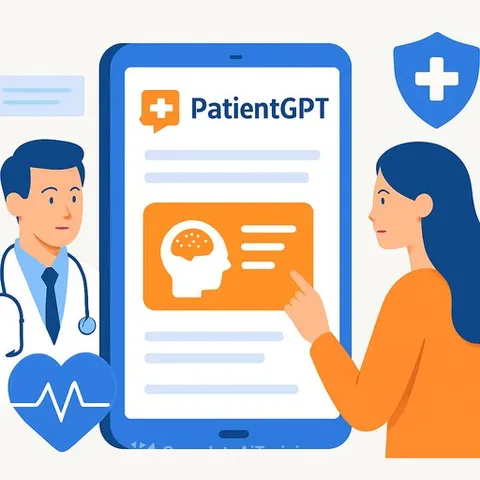
Hartford HealthCare has integrated PatientGPT, an AI assistant developed with vendor K Health, directly into its electronic health record system and patient portal. The move addresses patient use of general-purpose AI by providing clinically governed health guidance with built-in physician oversight, seeking to prevent data privacy risks and gaps in continuity of care.
Patients increasingly seek health answers from general-purpose AI platforms that lack access to medical histories, medications, or care teams. Health system leaders worry this trend exposes sensitive health data to third parties and leaves patients without a reliable path back to clinical care. Hartford HealthCare developed PatientGPT to connect consumer demand for conversational AI with the clinical safety required by an integrated health system.
Embedding AI within clinical workflows
The system operates within Hartford HealthCare's secure digital perimeter rather than as a standalone chatbot. Patients can ask health questions, review lab results in plain language, and receive educational information personalized to their medical histories. "Ultimately, our goal was to build a secure bridge between on-demand conversational expectations and the uncompromising clinical safety, verification, and data integrity that only an integrated health system's electronic health record infrastructure can guarantee," said Padmanabhan Premkumar, president of Hartford HealthCare Medical Group.
As organizations evaluate AI for Healthcare, Hartford HealthCare's approach demonstrates that patient-facing tools must connect directly to clinical workflows rather than operating as isolated applications. The platform securely references a patient's longitudinal clinical history to personalize responses without generating generic scripts.
Maintaining human oversight and safety
PatientGPT includes a human-in-the-loop architecture that prevents it from autonomously diagnosing conditions or prescribing therapies. When questions become clinically complex or reveal higher-acuity concerns, the system routes patients to appropriate care resources, including scheduling capabilities and a 24/7 virtual care platform. "The operational mechanics of PatientGPT were intentionally architected to eliminate the context vacuum inherent in public AI models," Premkumar said.
Before launch, the organization's Institutional Review Board oversaw a formal evaluation process. Physicians and clinical experts tested the platform using 478 structured clinical transcripts designed to challenge its safety boundaries and identify edge cases. This testing reduced high-risk failure rates by 70%, bringing the rate down to 5.9%. The organization reports zero harm events since the platform entered live production.
Early adoption and patient engagement
The rollout is continuing across Hartford HealthCare's primary care population, which will eventually include more than 400,000 patients. Approximately 40,000 users have already been activated. Nearly half of these active users are age 60 or older. The health system also reports a 20% repeat utilization rate among early users, indicating that patients are returning to the platform for ongoing health conversations.
Why this matters for healthcare professionals
Healthcare organizations must anticipate that patients will seek AI-driven answers, whether the health system provides them or not. By embedding governed AI directly into the electronic health record, systems can capture these interactions, maintain data privacy, and directly route patients back to clinical care when necessary. Professionals managing patient portals or clinical workflows should evaluate how their existing infrastructure can support similar secure, context-aware AI integrations.