
AI news ·
Hauora Māori Service adapts Microsoft 365 Copilot with tikanga principles in model that could scale across Health New Zealand
New Zealand's Hauora Māori Service built a culturally grounded AI tool called BroPilot, customizing Microsoft 365 Copilot with input from 200 tikanga Māori specialists. The model is now being scaled to 80,000 Health New Zealand staff.
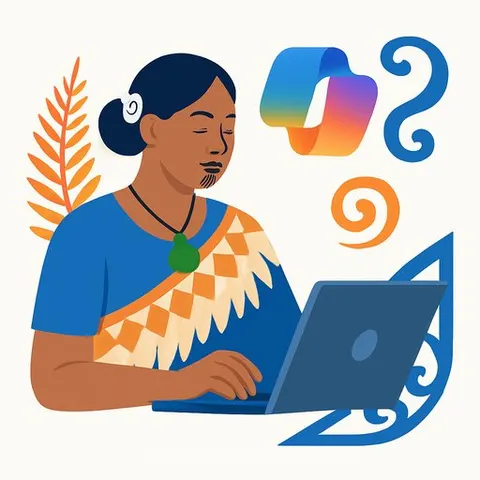
Health Service Builds AI Tool Rooted in Māori Culture to Scale Across 80,000 Staff
Hauora Māori Service has adapted Microsoft 365 Copilot to reflect Māori values and practices, creating a model for rolling out generative AI across Te Whatu Ora Health New Zealand's workforce without imposing a one-size-fits-all technology mandate.
The digital team customized the tool - internally called BroPilot - to support daily reporting, governance, and programme work while grounding it in tikanga Māori (Māori cultural practices). Both Māori and non-Māori staff now use it across the service.
Rather than launch a standard rollout, the team designed BroPilot around trust, local ownership, and hands-on learning. Staff test the tool on real work in a secure enterprise environment, addressing initial hesitation and skepticism about AI adoption.
How the Implementation Works
The digital team worked with more than 200 specialists in tikanga Māori to customize the platform using Māori language resources and cultural guidance. Copilot generated 16 measurable standard operating procedures grounded in Māori values including mana, wairua safety, and tino rangatiratanga.
Drop-in sessions held Monday and Wednesday allow staff to test Copilot on their own documents and develop prompts. The tool has been used to summarize long documents, extract actions, refine reports, and clarify dense material for review.
Some staff created role-specific personas for the assistant, including research support, cultural advice, daily tasks, and executive-level document work. Beyond administrative tasks, BroPilot serves as a cultural safety tool - helping staff from different backgrounds check which tikanga Māori principles apply in healthcare scenarios, including end-of-life care.
Building Sustained Use Across a Large Workforce
Troy Baker, senior ICT specialist at Hauora Māori Service, identified three conditions needed before scaling BroPilot to Health New Zealand's 80,000 staff.
First: a safe enterprise environment. Staff trust that Enterprise Copilot operates within Health New Zealand security, privacy, and data boundaries. That safety permits experimentation and learning without fear.
Second: local ownership instead of central prescription. Drop-in sessions meet people where they are - some participants are advanced and building agents, while others are new and anxious. Scaling requires enabling local champions and allowing teams to shape how Copilot fits their workflows and cultural context, rather than enforcing a standardized script.
Third: protected learning time embedded in real work. Capability builds fastest when experimentation is anchored in everyday work with actual documents and community purpose, not generic examples.
Moving From Curiosity to Accountable Use
The strongest insight from the rollout is that confidence comes from relevance, not instruction. Once staff see Copilot helps solve something real - whether a reporting burden, a confusing brief, or community engagement notes - hesitation shifts to regular use.
Baker said training must move beyond "how Copilot works" into how to think with the tool. Sessions focus on prompting as a thinking process and on checking outputs critically rather than accepting them at face value.
A core message reinforced consistently is that Copilot does not own decisions; people do. Users are reminded they remain accountable, just as they are when using calculators or spreadsheets.
Sustained use improves when teams share prompts, agents, and patterns that reflect their values and workflows. This has emerged organically through prompt diaries, shared agents, and collaborative learning rather than top-down enforcement.
Addressing Staff Concerns
Concerns about trust and cultural risks - over-reliance, misinterpretation of Māori knowledge, or cultural misuse - are addressed directly, particularly around data transcription, Māori data sovereignty, and consent. Trust grows when staff see they can opt in, opt out, and shape boundaries collectively.
Values must be operationalized, not just stated. BroPilot works because tikanga Māori principles are actively built into how the tool is introduced, discussed, and governed. The tool is not positioned as flawless or authoritative, which reduces fear and keeps users engaged as responsible decision-makers rather than passive consumers of AI output.
The BroPilot work builds on the HealthX Microsoft Copilot initiative, which began in August 2025 and has expanded to more than 2,050 licenses across Health New Zealand since January. HealthX identified priority use cases and coordinated deployment with senior clinical executives, Hauora Māori Service, and Digital Services, sequencing rollout to leadership and digital teams first.
For healthcare professionals looking to understand how generative AI can be implemented with cultural context and staff engagement in mind, explore AI for Healthcare and Microsoft AI Courses for practical training on Copilot adoption in enterprise health settings.