
AI news ·
Health-ISAC report urges expanded vendor oversight of healthcare AI supply chains
Health-ISAC warns standard vendor checks miss AI supply chain risks flagged in its 2026 report. Providers must require continuous monitoring for third-party AI tools.
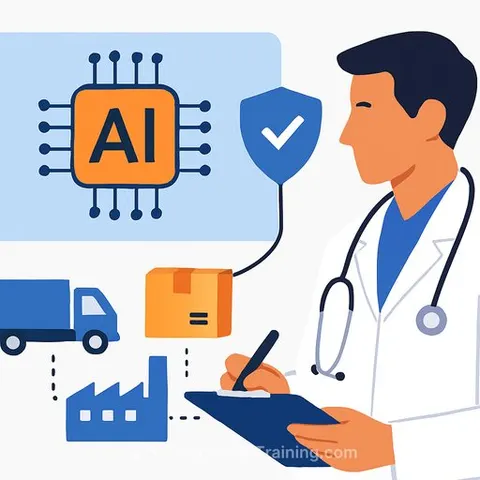
A new report from Health-ISAC published July 14 warns that traditional third-party risk management practices are no longer sufficient for the growing complexity of AI supply chains in healthcare. As AI tools become embedded in electronic health records, medical devices, and administrative workflows, providers face mounting security, privacy, and operational risks from third-party developers and suppliers they often have limited visibility into.
The report, "Frontier AI in the Health Sector: Managing Supply Chain and Vendor Risk," urges healthcare organizations to expand vendor oversight beyond cybersecurity reviews. For professionals working with AI for Healthcare, the findings highlight that point-in-time assessments and conventional procurement processes can miss the risks introduced by AI models, training data, and software dependencies that change over time.
Supply chain complexity and black box risks
Health-ISAC notes that AI supply chains introduce new challenges because organizations often have limited visibility into how AI models are developed, trained, updated, or integrated into vendor products. These black box dependencies create security, privacy, regulatory, and operational risks that are difficult to detect using traditional procurement methods.
The report arrives as supply chain attacks remain one of healthcare's most persistent cybersecurity threats. Health-ISAC's 2026 threat report on the healthcare sector found that attackers are increasingly targeting vendors and technology providers to gain access to multiple healthcare organizations through a single compromise. It also identified AI-enabled cyberattacks as one of the sector's top concerns for 2026.
Report recommendations for healthcare organizations
The report outlines several actions healthcare organizations should take:
- Establish AI-specific vendor governance and procurement policies.
- Require greater transparency from vendors regarding AI models, training data, software dependencies, and subcontractors.
- Continuously monitor AI-enabled systems throughout their lifecycle rather than relying solely on point-in-time security assessments.
- Incorporate AI risk into existing enterprise risk management, cybersecurity, and compliance programs.
- Develop clear contractual requirements covering AI governance, incident reporting, model updates, and accountability.
Aligning with NIST's AI risk framework
The guidance aligns with the NIST AI Risk Management Framework and emphasizes that healthcare organizations should evaluate not only direct technology vendors but also the broader ecosystem of suppliers supporting AI-powered products and services.
Why this matters for healthcare professionals
Healthcare leaders, CIOs, and compliance officers must update vendor risk programs to account for the unique characteristics of AI systems. The report shows that relying on conventional security audits and one-time assessments leaves organizations exposed to evolving risks from model updates, data drift, and third-party dependencies. Building AI-specific governance into procurement and ongoing monitoring is now a core part of supply chain security.