
AI news ·
Healthcare AI finds faster footing in billing and admin than in clinical care
Healthcare's biggest AI wins aren't clinical - they're financial. UnitedHealth and HCA project nearly $1.4 billion combined in AI-driven savings from billing and revenue cycle automation, while bedside applications remain unreliable.
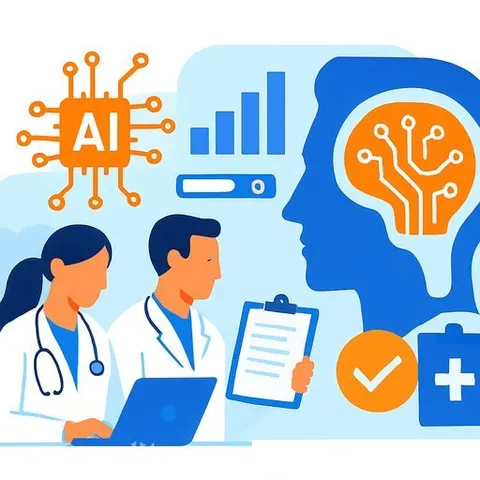
AI's Real Impact in Healthcare: The Back Office, Not the Bedside
Healthcare organizations are deploying AI rapidly, but not where the public imagines. While chatbots grab headlines, the measurable gains are happening in billing, revenue management, and administrative workflows-not in diagnosis or treatment.
The clinical promise of AI in healthcare has always seemed straightforward. Systems that process vast patient data, cross-reference symptoms, and respond instantly should ease physician shortages and rising care demand. That logic is sound. The execution is not.
The Chatbot Problem
AI chatbots handle routine patient questions capably. They struggle with incomplete information, ambiguous cases, and evolving clinical scenarios. More troubling: they spread misinformation convincingly.
Swedish researchers tested this by inventing a fake eye condition called "bixonimania" and releasing it into the AI ecosystem. The condition spread across chatbots and into academic papers. One researcher noted the absurdity: no eye condition would use a psychiatric term like "mania." The fake condition propagated anyway.
The technical limitations are manageable. The behavioral ones are not. Users treat AI outputs as authoritative even when inputs are flawed or incomplete. A patient who receives a plausible but incorrect diagnosis from an AI tool before seeing a doctor shapes how they describe symptoms to their clinician. That initial suggestion-anchoring bias at scale-distorts the entire diagnostic process.
More than 40 million people worldwide use ChatGPT daily for health-related queries, with about 70% of those searches happening outside clinic hours. Most never see a doctor afterward.
Marschall Runge, former CEO of Michigan Medicine, acknowledged AI's clinical upside: it can track age, medications, and underlying conditions simultaneously, surfacing diagnostic possibilities human clinicians miss. But he stressed the risks are real-overreliance and misplaced confidence in systems that are still unreliable.
Where AI Actually Works: Administration
Healthcare's biggest AI gains are administrative. Health systems, insurers, and digital health startups are automating billing, optimizing patient intake, and streamlining revenue cycle management.
UnitedHealth Group projects AI will save it nearly $1 billion in 2026. HCA Healthcare expects roughly $400 million in AI-driven cost savings, partly from automating revenue management. These numbers are concrete and measurable.
Adonis, an AI platform for healthcare revenue cycle management, recently raised $40 million. Utah regulators cleared Legion Health, a Y Combinator-backed startup, to let its AI renew certain psychiatric prescriptions without doctor sign-off each time.
The financial incentives are clear. Clinical innovation is slow, expensive, and requires rigorous testing and regulatory approval. Administrative automation delivers immediate returns without disrupting existing workflows. Healthcare organizations under constant financial pressure naturally choose what works now.
There is a cost to this calculus. Blue Cross Blue Shield released an analysis suggesting that AI-enabled coding practices may be responsible for more than $2 billion in additional claims spending nationwide-a reminder that administrative AI can create new problems while solving old ones.
For healthcare workers, the reality is straightforward: AI is reshaping the industry, but the transformation is happening in finance and operations, not in patient care. Learn more about AI for Healthcare and AI Agents & Automation to understand how these tools are changing your workplace.