
AI news ·
Healthcare AI should automate administrative tasks to preserve patient relationships
Healthcare AI is projected to be a $491B market by 2032, growing 43% annually. The real test is whether it restores human connection or repeats EHRs' efficiency-first failures.
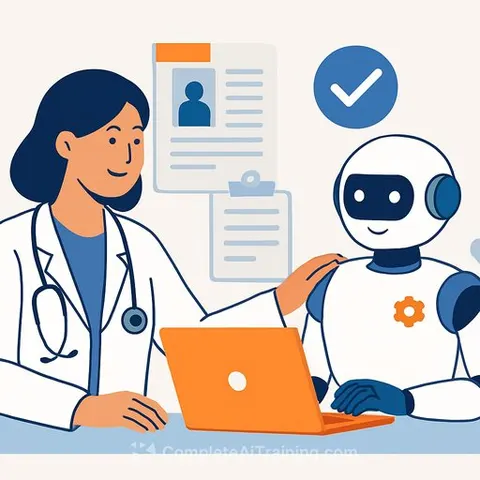
The healthcare AI market is on track to reach $491 billion by 2032, growing at a compound annual rate of 43%. Yet as new tools launch faster than health systems can evaluate them, a critical question is surfacing: will AI make care more human, or will it repeat the mistakes of electronic health records by prioritizing efficiency over empathy?
Physicians now spend nearly twice as much time on electronic health record tasks as they do on direct patient care, a cautionary reminder of what happens when technology is deployed without a grounding purpose. The risk is that AI, rolled out hastily, could erode trust - healthcare's most precious currency. Mark Weiser, the former head of Xerox PARC, wrote in 1991 that "the most profound technologies are those that disappear. They weave themselves into the fabric of everyday life until they are indistinguishable from it." That vision remains aspirational in an industry where administrative burden often crowds out human connection.
Automate the administrative, not the relational
The highest-value AI applications target the rote, transactional work that never directly served patients: prior authorizations, lab orders, scheduling logistics. Every administrative task lifted from a care team returns attention and presence to the patient. Foodsmart, a foodcare platform, designed its AI to handle the prep and administrative load so dietitians can focus on empathy and expertise. The goal is not to automate humans out of the loop, but to give clinicians their full attention back.
Make healthcare touchpoints smarter and more personal
AI can surface the right information at the right moment, so care teams start every conversation with full context. In longitudinal journeys such as fertility care, members navigate multi-step treatments that cross life stages. AI-generated summaries of prior interactions let advocates understand a patient's history before a call, so the dialogue begins with empathy rather than discovery. The member does not have to retell her story. As organizations adopt AI for Healthcare, they are finding that this continuity makes each interaction progressively more personal.
Design for continuous learning and improvement
When AI systems capture and iterate on signals from every interaction, they can strengthen human connection over time. Each patient touchpoint generates feedback - where care fell short or exceeded expectations - that informs forward-looking improvements. This approach moves beyond retrospective quality checks to create systems that learn how to do better.
The opportunity ahead
The most important measure of success for healthcare AI will not be deployment speed or automation rates. It will be whether patients feel more understood, more supported, and more connected to their care. By making technology disappear into the experience, as Weiser envisioned, the sector can make room for the human relationships that form the foundation of good health outcomes.
Why this matters for healthcare professionals
Leaders placing bets on AI should prioritize tools that remove administrative friction rather than replace human interaction. The real test is whether technology gives clinicians back the time they need for listening and empathy. Every hour returned through smarter systems is an hour available for the patient connection that drives better outcomes.