
AI news ·
Healthcare organizations adopt AI as an operational necessity amid rising equipment costs
Healthcare companies moved AI from pilot programs to core operations after July 2025 tariffs added up to $8,000 per device in manufacturing costs. Document routing, billing, and patient data analysis are now standard tools for staying solvent.
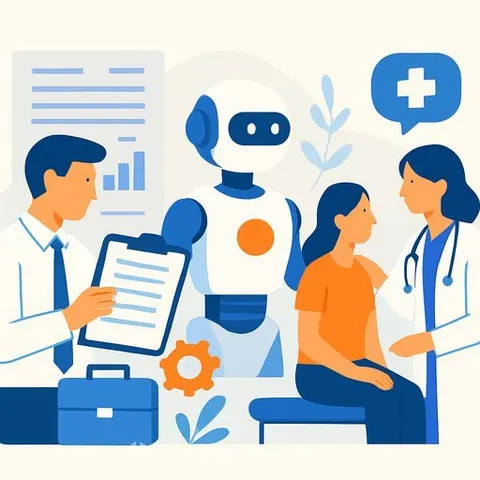
Healthcare organizations now treat AI as essential, not optional
Healthcare companies have shifted from testing AI platforms to embedding them as core business operations. The change came after July 2025, when new tariffs on durable medical equipment added $2,000 to $8,000 per device in manufacturing costs, forcing organizations to find efficiency gains elsewhere.
For home care providers, AI is no longer a competitive advantage. It's a requirement to stay operational.
Where AI is making the biggest difference
The most immediate application is document processing. AI sorts, indexes, and routes incoming paperwork-faxes containing new prescriptions, refills, or patient notes go to the right department automatically. Billing requests move through faster. Prescriptions reach pharmacies without delay.
The result: fewer lost documents, quicker appointment scheduling, faster payment processing, and stronger patient trust. For patients receiving home care, this means they access their doctors and medical records with less friction.
The second wave involves data analysis. Healthcare organizations historically lacked standardized, accessible data to connect patient engagement with clinical outcomes. Now, more companies adopt FHIR (Fast Healthcare Interoperability Resources) standards, which allow AI to analyze clinical data at scale.
This reveals which program initiatives deliver financial returns and improve patient health. Organizations can compare patient journeys across different populations, payers, and care pathways. They monitor remote patient health without compromising care quality. Companies that tie their services to measurable outcomes will survive; those that don't won't.
What's coming next
Healthcare organizations are building toward AI-driven concierge models. Think of a digital travel advisor for health: patients access an AI assistant from home that guides them through every aspect of care-scheduling, finding providers, spotting care gaps, and nudging them toward prevention.
The system learns patient needs and keeps all providers aligned. It generates new data that improves future decisions.
Organizations that treat AI as a core function rather than a side project will position themselves to deliver measurable improvements in patient outcomes. Those that don't will fall behind.
Learn more about AI for Healthcare applications and implementation strategies.