
AI news ·
Healthcare systems combine predictive analytics and generative AI to guide clinical decisions
Hospitals pair predictive analytics with generative AI to turn risk alerts into direct care steps. This reduces clinician burden while maintaining HIPAA compliance.
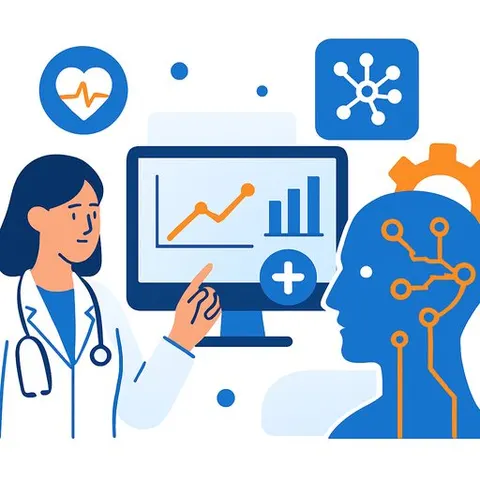
Healthcare systems are shifting from using artificial intelligence for isolated tasks to integrating predictive analytics with generative AI to guide clinical decisions. This combination aims to close the gap between identifying patient risks and determining the next steps for care, potentially reducing administrative burdens on clinicians.
Closing the gap between insight and action
Hospitals currently use predictive models to flag at-risk patients and prioritize care needs. However, these systems identify potential complications without always prescribing a response. Pairing predictive analytics with a Generative AI and LLM layer can translate complex data outputs into concise, actionable guidance for care teams.
For example, if a predictive model flags a patient at high risk for sepsis, a generative system can immediately summarize the condition, highlight relevant patient history, and recommend interventions. This feedback occurs directly within the clinician's existing workflow, reducing the time spent interpreting fragmented data across multiple systems.
Building a hybrid infrastructure
Supporting this combined approach requires infrastructure that differs from traditional setups. Predictive models, lightweight generative models, and large language models have distinct compute and performance requirements. Running every workload in a single environment often proves expensive and difficult to scale.
Healthcare institutions are increasingly adopting hybrid approaches to distribute these workloads. Smaller predictive and generative models can run closer to where data resides, such as on the edge or in on-premises environments. Larger, compute-intensive workloads are reserved for centralized data centers or cloud platforms, which helps balance performance, cost, and security while maintaining HIPAA compliance.
Establishing continuous feedback loops
Technology alone does not guarantee successful adoption in clinical settings. Clinicians must trust the systems they use to make patient care decisions. Institutions can build this trust by establishing feedback loops that connect clinical outcomes back into AI systems.
Capturing how recommendations are used and the outcomes they produce allows healthcare systems to refine model performance based on real-world application. This continuous improvement turns AI from a novel tool into a trusted clinical support partner.
Why this matters for healthcare professionals
For clinicians and healthcare administrators, this shift means AI will move beyond simple documentation or scheduling assistance. By embedding actionable, AI-driven insights directly into existing workflows, care teams can reduce cognitive overload and redirect their focus toward direct patient interaction. Evaluating current infrastructure to support hybrid AI deployments will be a necessary step to realize these operational improvements.