
AI news ·
Home health providers turn to AI to ease compliance work
Home health agencies deploy AI agents for compliance documentation and credential tracking. The tools flag missed visits and block scheduling when licenses expire.
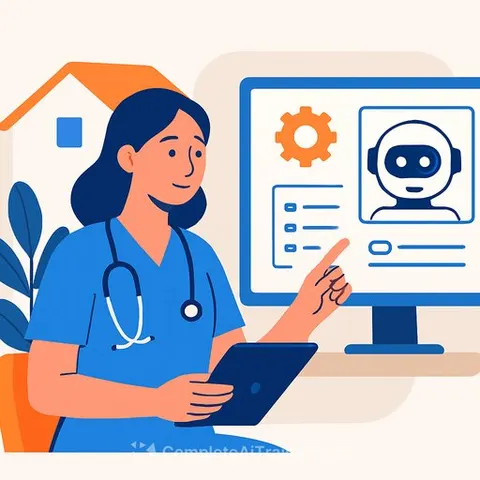
Home healthcare providers face heavy manual workloads to meet state and federal compliance rules, from documenting patient visits to tracking expiring staff credentials. Clinicians and agencies are now turning to AI agents and ambient scribes to handle these administrative demands, aiming to reduce delays and free up nurses for patient care.
How AI tightens the audit trail
Government agencies like CMS require detailed documentation on form CMS-485, which lays out diagnoses, treatment plans, and visit frequency for each patient. David Finkelstein, CIO at RiverSpring Living, said AI agents can compare nurses' visit notes against these treatment plans to flag omissions or inconsistencies. "It has limits and has details on exactly what care and treatment are being authorized by the doctor to be covered under that spell of illness," he said.
Ambient AI tools now help nurses complete documentation in the home before the notes reach the EHR. Back-office staff then check that notes align with doctors' orders and billing rules. This creates a faster, more reliable audit trail. Melinda Phillips, who leads the Care@Home Center for Excellence at Arya Health, described the impact on missed visits: if a caregiver doesn't show, AI agents can detect the gap and suggest a replacement based on licensure, availability, and case type. "The difference is speed and consistency," Phillips said. "Instead of relying on one coordinator under pressure, Arya ensures coverage is pursued systematically and documented."
Surveyors from Medicare-certified accrediting bodies-such as the Joint Commission, CHAP, and ACHC-already review EHR documentation for completeness and consistency. AI tools let agencies spot and correct problems earlier, before a surveyor finds them. For clinicians working alone in the field without a manager present, AI Agents & Automation can prompt them to complete required form sections, helping them avoid missing categories of questions.
Tracking expiring credentials without manual hunts
License and credential expirations remain a persistent risk for home health agencies. Phillips said an AI compliance agent can monitor nurses' credential status, flag upcoming deadlines, and block scheduling if requirements aren't met. "That way, you're not reacting to a problem; you're preventing it," she said. Finkelstein added that AI can search government databases to see if a provider's credentials have been revoked-something his organization currently checks manually once a month. Continuous monitoring would catch revocation or expiration incidents sooner.
Credential tracking includes mundane but critical items like PPD skin tests for tuberculosis screening and CPR course completion. Phillips described how the AI agent, when staffing a case, might say: "I see your PPD is coming due" or "I see your nursing license is expiring." Such alerts can prevent disruptions in care and reduce the administrative scramble to track down employees.
From reactive reviews to proactive compliance
Amy Hirsch, division director of clinical practice for Bayada Home Health Care's hospice division, said predictive AI tools give providers more oversight of risk areas and patterns before they become problems. "That creates a more proactive approach to compliance," she said. "Instead of relying only on retrospective review, providers can act sooner, support staff more effectively and improve consistency in care delivery." By moving away from manual medical-data tracking, Bayada clinicians get faster visibility into their workflows.
Finkelstein emphasized that some AI systems can spot abnormalities or contradictions in documentation, letting clinicians clarify records to avoid billing or compliance issues later. He also sees future value in AI that reads federal and state regulation updates and surfaces changes relevant to the organization. "The regulations and codes from the federal and state governments are constantly changing, so having a bot that would read the updates … would be helpful to ensure that you stay in compliance," he said.
Still, Phillips warned that AI cannot fix broken processes. "A home care agency needs to make sure it has the appropriate workflow because automation won't fix a compliance challenge; it'll just expose it," she said. AI only automates tasks effectively if the agency first has sound compliance structures in place.
Why this matters for healthcare professionals
For home healthcare nurses and aides, AI tools reduce the burden of after-hours documentation and manual credential tracking, giving them more time with patients. Nurses who already use tablets for charting are most likely to embrace AI in their workflow, Finkelstein noted. The technology won't replace clinical judgment, but it can catch omissions, flag expiring licenses, and surface gaps before they become audit findings. As agencies adopt these tools, clinicians should expect less retrospective paperwork-and more support at the point of care. The job becomes one of verifying and refining AI-generated checks, not chasing administrative details. For professionals exploring the intersection of these tools and their field, AI for Healthcare resources offer a way to understand what's changing and how to adapt.