
AI news ·
Hotels won't get full value from AI until they redesign their meetings, argues Dr. Tong Yin
Hotels are loading up on AI tools, but most meetings still run the same way-managers explaining what happened instead of deciding what to do next. Until meetings change, the technology won't matter.
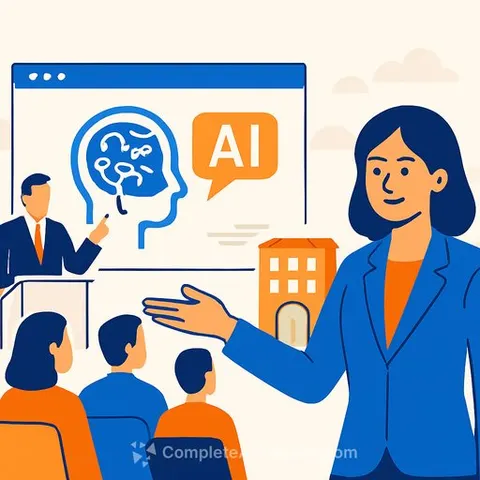
AI Won't Transform Hotels Until It Changes the Meeting
Hotels are adding artificial intelligence to their operations. Revenue dashboards grow more colorful. Forecasts arrive faster. Sentiment summaries run automatically. Yet the meetings where decisions actually happen remain unchanged.
That mismatch is the problem. If the meeting doesn't change, the hotel won't change.
Most hotel meetings still operate on an old rhythm: teams spend the majority of time explaining what happened. A manager explains why occupancy dropped. A revenue leader accounts for ADR movement. A department head justifies labor costs. A marketing manager reviews campaign results.
Explanation was once necessary because information was scarce. Pulling reports took time. Reconciling numbers took effort. Not everyone had access to the same data. Meetings distributed information because that was the bottleneck.
AI changes that equation. Summaries can be prepared before the meeting. Trends can be detected earlier. Guest feedback can be grouped automatically. Forecasts and scenarios can be generated in minutes. Channel performance can be visualized in near real-time.
The scarce resource is no longer the report. It's judgment.
The meeting must reward choice, not explanation
When a meeting still focuses on reading reports aloud, the organization wastes what AI provides. The meeting should move up the value chain. Instead of asking "What does the data say?" teams should ask "What decision does this require?"
That shift changes the entire management rhythm.
AI should free leaders to spend time on actual decisions: Which guest segment should the hotel pursue next week? Which rate fence needs adjustment? Which service problem deserves immediate redesign? Which channel should receive less inventory? Which staffing risk must be solved before the weekend?
A hotel using AI well designs meetings around these questions. Each meeting begins with the decisions required, not the reports available. Participants arrive prepared to evaluate trade-offs, not to discover numbers for the first time.
AI should reduce clutter, not add it
A common mistake is adding AI output to existing agendas without removing anything. The team now reviews old reports plus the AI dashboard plus the sentiment summary plus the forecast model plus channel alerts. The meeting becomes heavier, not smarter.
AI should reduce clutter. The best use is often pre-work. Before the meeting, the system identifies the three most important changes, summarizes competing explanations, prepares scenario options, and highlights decisions requiring human judgment. Managers review this before entering the room. Then the meeting focuses on alignment and action.
This requires discipline. Not every AI insight deserves meeting time. Not every chart needs discussion. Not every anomaly matters. The organization must decide which signals are decision-worthy. Without this filter, AI becomes another source of noise.
Revenue meetings need broader signals
The traditional revenue meeting is too narrow for an AI-enabled environment. It focuses heavily on occupancy, ADR, RevPAR, pickup, and competitor pricing. These metrics matter, but they don't fully capture modern demand behavior.
AI allows revenue meetings to include: guest intent before booking, channel profitability rather than gross production, search and inquiry patterns, event-driven demand shifts, cancellation and rebooking behavior, guest sentiment tied to price perception, direct-booking conversion by segment, and ancillary spend.
This broader lens requires broader participation. Revenue, marketing, sales, distribution, operations, and sometimes finance should not operate from separate realities. AI can help create a shared demand view, but the meeting must be designed to use it. The revenue meeting should become a commercial decision meeting.
Operations meetings should shift to predictive readiness
Most operational discussions are reactive: what happened yesterday, which problems occurred, where staffing is tight, which maintenance issues remain. AI supports a more predictive rhythm.
Instead of reviewing guest complaints after they occur, hotels can identify which service failures are likely to repeat. Instead of only reacting to labor pressure, they can spot where staffing risk will affect service before scores decline. Instead of only reviewing VIP arrivals, they can identify guests whose stay context requires special care.
Operational leaders still need judgment. They understand property layout, employee strengths, local events, guest mood, and service culture in ways a system cannot. But AI helps them see earlier and prepare better. The operations meeting should become a service risk and readiness meeting.
Every AI meeting needs accountability
AI can generate insight without creating accountability. A hotel may identify a problem, discuss it intelligently, and still fail to act. The meeting ends with agreement but without ownership. The next week, the same issue returns.
Every AI-supported meeting should close the loop:
- What decision was made?
- Who owns the action?
- By when?
- What outcome will be reviewed?
- What did we learn if the decision fails?
This turns AI from a reporting tool into a management discipline. It prevents the organization from confusing insight with progress. The value of AI is realized when the hotel changes behavior because of a pattern, not when the system detects it.
The general manager becomes the meeting designer
In an AI-enabled hotel, the general manager should not become a passive recipient of dashboards. The general manager becomes the designer of decision rhythm.
The GM decides which meetings should change, which questions matter, which signals deserve attention, and how departments will work from a shared view. The GM protects the organization from both blind faith in AI and defensive resistance to it.
This is not a technical role. It's a leadership role. The GM should ask: Are our meetings helping us learn faster? Are we using AI to challenge assumptions? Are we making decisions earlier? Are departments acting together? Are we documenting outcomes so the organization improves?
If the answer is no, the hotel may have AI tools but not AI-enabled management.
Start with one meeting
Hotels don't need to transform every meeting at once. Choose the weekly revenue meeting or the main operations meeting. Remove agenda items that AI can summarize in advance. Add three decision questions. Require pre-read review. Define action ownership. Track whether decisions improved outcomes.
After four weeks, review the meeting itself. Did it become shorter? Did it produce clearer decisions? Did managers arrive better prepared? Did AI reduce noise or add noise? Did the team learn faster?
This kind of management redesign may feel less exciting than buying new technology. But it's often where AI value is won or lost.
Transformation happens in the room
Hotel AI strategy should not live only in vendor demos, corporate presentations, or technology roadmaps. It must enter the rooms where decisions are made. If those rooms don't change, the organization may not change.
The future AI-enabled hotel will have better dashboards, better meetings, better questions, better accountability, and faster learning. It will use automation to reduce reporting burden and increase decision quality.
That is when AI begins to transform hospitality management-not when the report is generated, but when the meeting changes.
For more on applying AI to your role, explore resources on AI for Hospitality & Events and AI for Management.