
AI news ·
Hospitality's AI gold rush enriches consultants and conference organizers while smaller operators foot the bill
Only 3% of hospitality businesses have fully implemented AI, yet costly conferences and consultants sell "transformation" as survival. The real risk isn't falling behind-it's automating away the human warmth guests actually pay for.
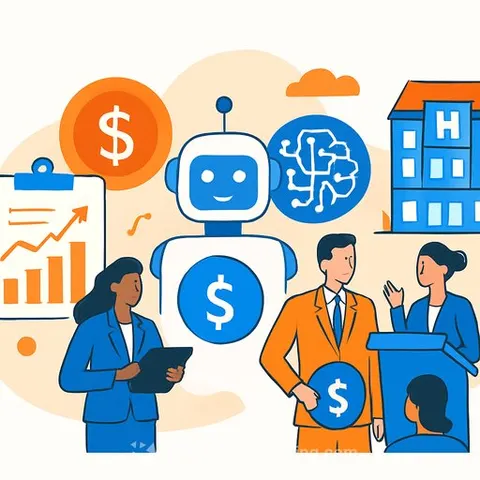
The AI Consulting Boom Is Reshaping Hospitality Costs-and Guest Experiences
Fear of falling behind has become hospitality's newest product. Hotel owners attending industry conferences are encountering an expanding ecosystem of consultants, software platforms, and certification programs all positioned as essential to survival in an AI-driven future. Yet only 3% of hospitality organizations have achieved full-scale AI implementation, according to a recent PwC report, while over 90% remain in early experimentation.
The gap between hype and reality is creating a lucrative secondary market. Conference tickets now cost thousands of dollars before travel. Sponsorship packages reach substantial sums. Exhibition floors feature vendors selling "AI transformation" solutions alongside courses that promise to turn staff members into AI experts in weeks.
What's Actually Being Sold
The language at these events often obscures ordinary software. Panels discussing "predictive guest sentiment modeling" or "agentic hospitality ecosystems" frequently describe reservation systems and customer communication tools repackaged with futuristic branding. A hotel owner seeking practical guidance on booking systems may instead encounter abstract discussions of disruption and inevitable change.
Industry groups monetize this uncertainty directly. Organizations like the Boutique & Luxury Lodging Association promote AI crash courses and proprietary software suites while framing conference participation as essential preparation for an accelerating future.
The commercial structure is familiar: each new platform promises to simplify operations while introducing another subscription invoice, another dashboard, another integration partner, and another dependency requiring future maintenance. Those costs eventually surface in room rates, resort fees, or reduced service quality.
A Pattern Hotels Have Seen Before
Veteran operators recognize this cycle. From the Web 2.0 era through social media marketing, mobile-first booking, reputation management systems, and guest apps, the industry repeatedly adopted rapidly evolving technologies before standards or long-term value had settled. Many investments became obsolete, redundant, or incompatible.
Artificial intelligence may ultimately prove more transformative than earlier waves. But the underlying pattern persists: periods of rapid innovation produce as much commercial anxiety and opportunistic overselling as genuine utility. Smaller operators face pressure to commit to expensive ecosystems before the market itself has matured.
What Guests Actually Value
Boutique hospitality became valuable by resisting the industrial sameness that large-scale automation created. Travelers pay premium prices for atmosphere, locality, personality, and small imperfections that signal authentic human presence.
What guests remember years later is rarely a frictionless digital upsell funnel. It's the handwritten restaurant suggestion at reception, the bartender improvising a drink not on the menu, the owner who remembers their name from years earlier, or the dog asleep by the lobby fireplace. These details are not inefficiencies requiring optimization. They are hospitality itself.
Where AI Can Actually Help
This does not mean artificial intelligence lacks value. Many smaller operators could benefit from carefully selected tools that reduce repetitive administrative work, improve multilingual communication, simplify reservations, or help independent properties compete with larger chains possessing greater technical resources.
Used modestly and with clear purpose, AI may lower staff stress while freeing people to do what guests actually value: solving problems creatively, offering warmth, improvising solutions, and creating experiences that feel personal rather than procedural.
The danger emerges when practical utility becomes overshadowed by technological theater. Fear-driven adoption pressures businesses into expensive systems they neither need nor understand.
The Core Contradiction
Many voices discussing hospitality's AI future appear detached from why people travel. Humans cross oceans because they are lonely, exhausted, curious, heartbroken, or desperate to feel alive somewhere different. Hospitality has always been emotional technology long before Silicon Valley appropriated the term. It is the ancient art of temporary belonging.
The risk is not that artificial intelligence will suddenly replace hotel owners. It is that executives may slowly automate away the imperfections, spontaneity, and human warmth that made boutique hospitality valuable enough to survive in an age of global standardization.
A Middle Path
The smartest operators will avoid both extremes. They will neither reject artificial intelligence reflexively nor surrender to consultant narratives insisting every property must immediately become a fully integrated digital ecosystem.
Instead, they will experiment carefully, adopt selectively, preserve human identity aggressively, and remember that technology functions best when it supports atmosphere rather than replacing it. Travelers tolerate mediocre apps and malfunctioning televisions far more readily than the creeping sensation that nobody is truly there anymore.
For hospitality professionals evaluating AI adoption, resources like AI for Hospitality & Events and AI for Customer Support offer practical guidance grounded in actual implementation rather than conference-floor urgency.