Coca-Cola’s AI Demand Forecasting Boosts Sales by 8%
Coca-Cola’s CIO, Neeraj Tolmare, takes a clear stance on AI initiatives: every pilot must prove it can generate revenue or significantly improve efficiency before full rollout. This practical approach follows CEO James Quincey’s direction that AI experimentation should deliver measurable business results.
With a daily distribution of 2.2 billion beverages, Coca-Cola operates at an immense scale. Tolmare ensures that AI projects consider implementation costs and can be applied across departments, from software to sales. He also evaluates how emerging agentic AI will affect workflows and data exchange internally and with partners like 200 bottlers and 950 production sites.
AI-Driven Demand Forecasting in Retail
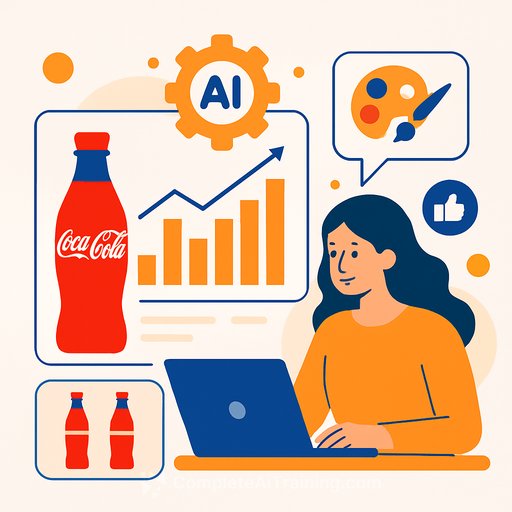
One standout project is Coca-Cola’s AI algorithm designed to help retail outlets predict demand more accurately. This system combines historical sales data, weather conditions, and Google’s geolocation data to forecast future sales. Based on these predictions, managers receive WhatsApp alerts advising them when to restock popular products like Sprite or Diet Coke.
Testing in three countries showed a 7% to 8% sales increase at stores using this AI compared to those that didn't. Following these results, Coca-Cola plans to expand this tool to additional markets worldwide, aiming to optimize inventory and boost revenue.
AI in Content Creation for Global Marketing
Coca-Cola’s marketing team faces the challenge of producing content in over 130 languages across 180+ countries. To speed up and scale this process, the company generated 20 AI-created marketing assets based on its proprietary intellectual property. From these, 10,000 variations were produced for different languages and regions.
Consumers engaged 20% more with this AI-generated content, which was created three times faster than previous manual methods. This efficiency gain demonstrates how AI can help sales teams by delivering targeted marketing materials quickly and effectively.
Human Oversight Remains Critical
While AI uncovers insights and speeds up content creation, Tolmare stresses that human involvement is essential. The complexity of mining data and crafting marketing messages requires careful review to avoid issues like social bias or factual errors. Past AI-generated campaigns, including a Christmas spot and a campaign with a misquoted author, highlighted these challenges.
Coca-Cola maintains strict guidelines to prevent AI content from perpetuating biases or spreading misinformation, ensuring that AI remains a reliable tool rather than a standalone creator.
Cloud and AI Strategy
Since joining Coca-Cola in 2018, Tolmare has driven its shift to cloud computing, shutting down physical data centers and focusing on Microsoft Azure, Amazon Web Services, and Google Cloud. This hybrid cloud model supports the company’s AI experimentation and workload flexibility.
Coca-Cola collaborates closely with Microsoft and OpenAI but keeps options open with other AI providers like Google, Meta, and Anthropic. This approach avoids early lock-in as the AI market continues to develop.
Exploring Agentic AI for Autonomous Tasks
Looking ahead, Coca-Cola is testing agentic AI systems designed to perform tasks autonomously or with minimal human input. The company is evaluating solutions from Microsoft, SAP, Adobe, and developing custom AI agents trained on Coca-Cola's own data.
These pilots aim to determine cost-effectiveness and identify the best use cases before wider deployment. Tolmare is optimistic about agentic AI’s potential and expects to launch production applications soon.
What Sales Professionals Can Learn
- Data-driven demand forecasting can directly increase sales by optimizing stock levels and reducing missed opportunities.
- AI-generated marketing content enables faster, localized campaigns that improve customer engagement.
- Maintaining human oversight is vital to ensure AI tools produce accurate and bias-free outputs.
- Flexibility in AI partnerships allows companies to adapt as technology providers evolve.
For sales teams, integrating AI tools that focus on practical outcomes—like demand prediction and content creation—can improve efficiency and revenue. Staying informed on AI advancements and their applications in sales will help professionals adapt and thrive.
To explore AI skills that can boost your sales performance, visit Complete AI Training’s sales-focused courses.
Your membership also unlocks: