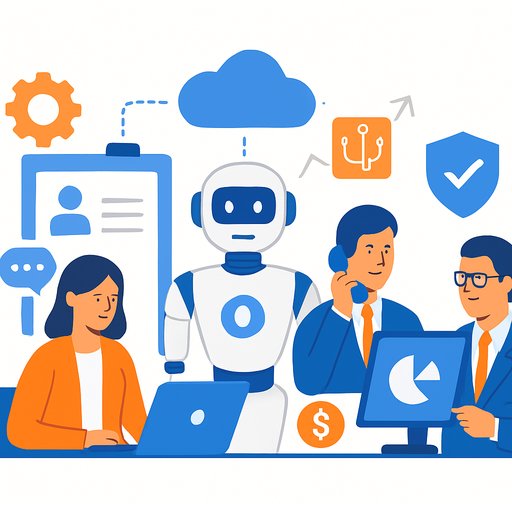
HR strain and AI adoption are reshaping the US benefits market
HR, employee benefits, and new tech are colliding - and the takeaway is simple: employers want fewer vendors, smarter tools, and clearer support. The Hartford's 2026 Future of Benefits Study signals a shift away from stand-alone products toward integrated, tech-enabled solutions that reduce admin work and help employees make better choices.
Single-carrier demand is accelerating
HR teams are stretched. Seventy-three percent said their day-to-day responsibilities have increased, and 64% said managing multiple carriers is challenging. At least two in three cited simplicity and cost as top reasons to choose a single non-medical carrier.
That's a clear signal: employers are moving to "one-stop" arrangements that bundle life, disability, supplemental health, and leave/absence management on one platform. Niche carriers that rely on multi-vendor stacks face headwinds as RFPs tilt toward consolidation.
- What employers expect from a single-carrier setup:
- Integrated enrollment tools
- Standardized leave products
- Consolidated administration
- Centralized claims expertise
AI and digital tools are rising - with guardrails
Employers are open to AI, but with intent. Eighty-five percent are still exploring how to use it effectively, and 82% are comfortable using AI for parts of their job. More than half (54%) say HR technology and benefits platforms are "highly influential" in carrier selection, putting integration with major HRIS and ben-admin systems in the spotlight.
Critically, 95% want digital tools for simple or transactional tasks - and a human for sensitive, complex issues. Push too far into automation and you risk a mismatch, especially on disability, leave, and complex health claims where experienced case managers matter.
- Good fit for self-service: routine changes, claims status checks, basic inquiries
- Keep human support: complex disability/leave cases, escalations, sensitive health events
If you're formalizing AI use in HR or claims, align with recognized frameworks like the NIST AI Risk Management Framework to balance innovation and risk - and consider role-focused training such as the AI Learning Path for CIOs.
Enrollment fatigue keeps education front and center
Benefits education is still tough. Seventy-nine percent of employers say it's difficult, with employees juggling multiple platforms and decisions during open enrollment. In response, 95% are improving their 2026 enrollment experience, using digital decision support and AI-driven recommendations.
For insurers, that means continued demand for carrier-provided content, calculators, and recommendation tools - and pressure to simplify product design and language so employees actually understand voluntary and supplemental options.
Size matters: 58% of small employers look to brokers for open enrollment guidance, compared with 42% of larger employers. Brokers remain central in distribution, education, and carrier selection.
What HR leaders can do now
- Consolidate where it reduces friction: prioritize single non-medical carriers with broad product suites.
- Demand clean integration: verify native connections to your HRIS/ben-admin, data exchange cadence, and API maturity.
- Define the service split: document which moments are digital-first vs. human-first - and hold carriers to it.
- Upgrade enrollment: require decision support, clear comparisons, and plain-English summaries for every product.
- Use your broker: lean on them for plan design, employee education, and platform fit - especially if you're a small or mid-sized employer.
- Level up AI fluency on your team to evaluate tools and vendors faster. If helpful, explore role-focused resources like AI for HR.
What carriers should prioritize
- Be consolidation-ready: offer life, disability, supplemental health, and leave/absence on a single platform.
- Win on integration: build and maintain robust APIs, pre-built HRIS/ben-admin connectors, and reliable data exchange.
- Hybrid service model: fast digital for routine tasks, trained humans for complex and high-stress claims.
- Enrollment muscle: deliver decision support, calculators, and simplified collateral HR can deploy out of the box.
- Broker enablement: co-branded education kits, quick-quote pathways, and consolidated reporting.
- RFP alignment: show total cost and admin savings from consolidation, not just product rates.
Signals for brokers and advisers
- Lead with simplicity: reduce vendor count, integrate platforms, and clear up plan choices.
- Quantify value: time saved for HR, fewer data feeds, cleaner billing, faster claims, higher enrollment clarity.
- Double down on education: small employers especially need guidance for open enrollment.
Compliance and leave remain pivotal
Centralized leave/absence management is a core part of the single-carrier pitch. Cross-check carrier capabilities against regulatory needs such as the FMLA, plus state and local leave laws, to avoid gaps and rework. For teams responsible for compliance and data governance, consider the AI Learning Path for Regulatory Affairs Specialists to deepen practical knowledge.
The bottom line
RFPs are moving toward consolidation, integration, and hybrid service. Carriers that combine broad product suites with strong tech and human expertise will win. As the report notes, "Carriers with insight into today's evolving workforce will be best positioned to create effective solutions that support all workers," said Mike Fish, head of employee benefits at The Hartford.
Less vendor sprawl. Better integrations. Clearer education. That's the playbook for HR, insurers, and brokers heading into 2026.
Your membership also unlocks: