HR's Next Wave: Building Specialized Roles for an AI-Enabled Workforce
AI is taking over repetitive work. What's left for HR is deeper, more specialized expertise-closer to the work, faster with data, and integrated with how teams actually deliver results.
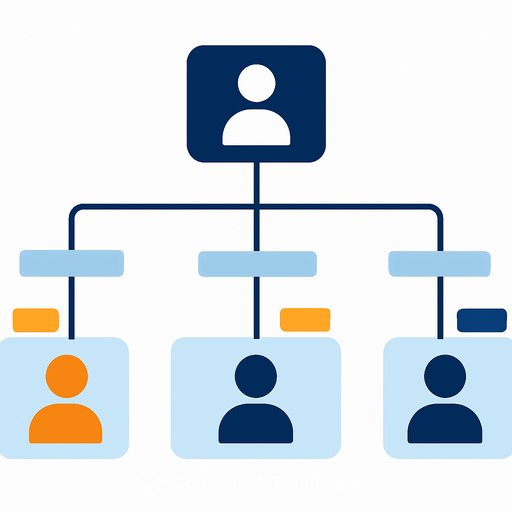
To get there, HR needs new roles that gather distributed knowledge, connect it, and turn it into outcomes. Here's the blueprint, plus how to staff, measure, and launch.
Embedded Chief of Staff Roles
Place HR operators inside product, engineering, sales, and ops to manage the people side of tech rollouts. Their job: make adoption stick, remove friction, and turn "HR policies" into playbooks teams actually use.
- Focus: rollouts, performance lift, change readiness, capability building.
- Key move: nurture "citizen HR" skills inside teams so managers self-serve well.
- Skills: change management, workflow design, analytics, stakeholder influence.
- Metrics: adoption rates, cycle-time reduction, quality/error rates, manager satisfaction.
Global Business Services "Productization" Leads
As AI links processes across finance, ops, IT, and HR, someone must package HR workflows as products and pass them to centralized enablement teams. That's this role.
- Focus: standardize HR processes, define APIs/hand-offs, align to enterprise platforms.
- Key move: retire duplicative services and consolidate where data can do the work.
- Skills: service design, platform thinking, vendor orchestration, governance.
- Metrics: cost-to-serve, time-to-integrate, rework rate, SLA attainment.
Community Managers
HR can't hold all expertise in one function. Build communities of practice-TA, L&D, data, frontline leaders-and keep them sharing what works.
- Focus: curate best practices, run forums, surface insights from the field.
- Key move: convert conversations into living guides and decision aids.
- Skills: facilitation, content curation, knowledge systems.
- Metrics: engagement, contribution rate, time-to-answer, playbook usage.
Work or Worker-Type Specialists
Own a domain (e.g., programming, customer service) or a worker type (e.g., contractors, early-career). Know the full lifecycle end-to-end and act like a talent agent for the business.
- Focus: supply pipelines, skills taxonomies, career paths, pay insights.
- Key move: partner with workforce planning to forecast and pre-fill critical roles.
- Skills: labor market data, assessment, internal mobility, EVP tuning.
- Metrics: time-to-fill, quality-of-hire, internal fill rate, retention in first 12 months.
HR "Labs"
A small team that runs simulations, experiments, and scenario tests on people questions. Think A/B testing for policy and program decisions.
- Focus: behavioral science, pilots, counterfactuals, risk checks.
- Key move: engineer new data sources and close the loop with outcomes, not opinions.
- Skills: statistics, experimentation, ethics, survey science, data engineering.
- Metrics: ROI of pilots, decision speed, forecast accuracy, policy impact.
Consensus Facilitators
When comp, rewards, and well-being get complex, you need expert mediators who build shared positions across leaders and employees.
- Focus: stakeholder mapping, trust building, structured trade-offs.
- Key move: codify agreements into clear frameworks teams can apply consistently.
- Skills: negotiation, systems thinking, communication, equity/ethics.
- Metrics: agreement rate, dispute resolution time, policy adherence, perceived fairness.
Product Managers (Inside HR)
Run HR services like products. Know the customer, ship improvements fast, and sunset what no longer delivers value.
- Focus: journey mapping, backlog, release cadence, cross-functional alignment.
- Key move: unify overlapping tools and reduce hand-offs that slow people down.
- Skills: UX, data literacy, prioritization, vendor management.
- Metrics: adoption, NPS/CSAT, drop-off rates, reduction in tickets and manual effort.
How to Launch in 90 Days
- Week 1-2: Pick two high-impact processes (e.g., hiring, onboarding). Define outcomes and baselines.
- Week 3-4: Stand up an Embedded Chief of Staff and a Product Manager. Write simple charters and decision rights.
- Week 5-6: Map the workflow, remove steps, set metrics. Draft a "citizen HR" playbook for managers.
- Week 7-8: Run a limited pilot. HR Labs designs the test; Community Managers capture learnings.
- Week 9-10: Adjust based on data. Productization Lead prepares integration with centralized teams.
- Week 11-12: Scale to a second team. Sunset one low-value HR service to fund the next pilot.
Core Skill Upgrades for HR
- Data fluency: read dashboards, ask better questions, challenge anecdotes.
- Workflow and service design: fewer steps, clearer ownership, faster paths.
- Experimentation: test, learn, iterate-then standardize.
- Stakeholder influence: shorten the path from agreement to action.
For a concise overview of AI's impact on people practices, this factsheet is helpful: CIPD: Artificial Intelligence in HR.
If you're building a training path by role, you can browse curated options here: Complete AI Training: Courses by Job.
Org Design and Sourcing Tips
- Start with secondments from ops, product, and data teams; pair them with HR leads.
- Recruit PMs from IT/product, analysts from finance, and facilitators from ER/communications.
- Create a light governance group to manage priorities, ethics, and data access.
- Budget by sunsetting low-use programs and consolidating overlapping tools.
Metrics That Matter
- Speed: time-to-fill, onboarding time, cycle time for manager requests.
- Quality: quality-of-hire, first-year retention, performance lift post-rollout.
- Experience: manager/employee CSAT, adoption, helpdesk deflection.
- Cost: cost-to-serve per HR product, tech overlap removed.
The shift is clear: fewer hand-offs, more specialty, and a product mindset. Set up these roles, measure what changes, and keep shipping improvements. HR becomes a builder again-close to the work, close to the data, and accountable for outcomes.
Your membership also unlocks: