
AI news ·
Human-centered AI helps supply chain operators act on customer signals before problems hit
Sales teams using historical order data only see problems after revenue has already dropped. Monitoring customer signals-support tickets, pricing questions, tone shifts-lets teams intervene weeks earlier, before accounts churn.
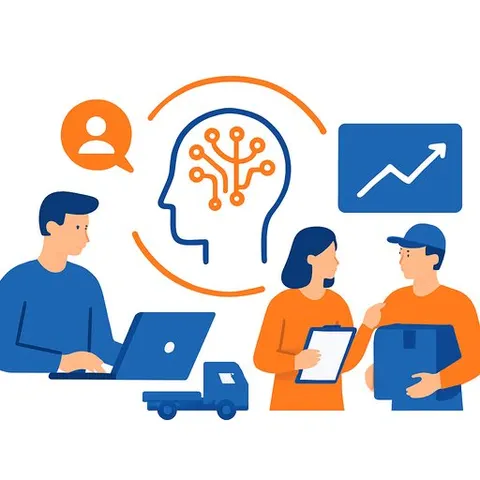
How Sales Teams Can Act on Customer Signals Before They Become Lost Deals
Most AI systems in industrial sales operate on historical data: orders, revenue, inventory. That approach catches problems after they've already cost you money.
A different model starts with customer signals - the conversations, emails, service cases, and behavioral patterns that reveal what customers actually need before they stop buying.
When AI processes these signals directly, sales teams can spot trouble weeks earlier and respond before accounts churn or deals slip away.
What changes when you shift upstream
Traditional forecasting relies on order history. It's backward-looking. By the time revenue declines show up in your numbers, you've already lost momentum with the customer.
Customer signals - rising support ticket volume, pricing questions, delivery complaints, shifts in tone - tell a different story. They surface intent, confusion, and unmet needs in real time.
The difference: a sales team that acts on these signals intervenes before a customer issue becomes a lost account.
Three concrete advantages
See the shift before it hits. Account health problems typically leave traces in human interactions long before they show up as revenue loss. Rising friction signals a customer in trouble. Teams that monitor and act on these patterns catch problems early enough to fix them.
Improve forecast accuracy. Real-time customer intent, inquiry volume, quote activity, and buying signals give you a fuller picture than historical orders alone. You can anticipate demand shifts weeks earlier and adjust pipeline and capacity planning accordingly.
Decide faster with less risk. When customer signals connect to operational and financial data, your AI has more context. Recommendations arrive with clearer information about revenue at risk, margin impact, and capacity constraints. You make better decisions in less time.
Making the transition work
The technology itself isn't the obstacle. What matters is how your organization prepares and manages it.
Align before you automate. If sales, service, operations, and finance use different definitions and track different metrics, AI will amplify that confusion. Get your teams on the same page - shared definitions, clear governance, cross-functional coordination - before you deploy any tool.
Build ongoing habits. No AI system runs itself. Leaders and early adopters need to model curiosity and data fluency. Change management processes that explain the "why" alongside the "how" help teams move from skepticism to understanding.
Develop your people. The highest-quality insights come from people who understand your customers. Recognize when team members surface valuable signals. Help them learn which inputs matter most for their role and where their judgment adds value on top of AI recommendations. Your people are a strategic asset in this work, not obstacles to automation.
What actually wins
In markets where customer expectations shift constantly, the organizations that win aren't those with the most data. They're the ones that hear customer concerns early and act on that intelligence fastest.
That requires alignment across people, systems, and data. When you get it right, you move from reacting to reports to taking action before problems materialize.
For more on how AI applies to your role, explore AI for Sales or the AI Learning Path for Sales Managers.