
AI news ·
Human instinct to trust fluent AI makes hallucinations harder to catch
AI systems regularly fabricate facts and fake sources - and we believe them anyway. Our brains evolved to treat fluent, helpful communicators as trustworthy, which makes catching AI errors harder as the tools grow more conversational.
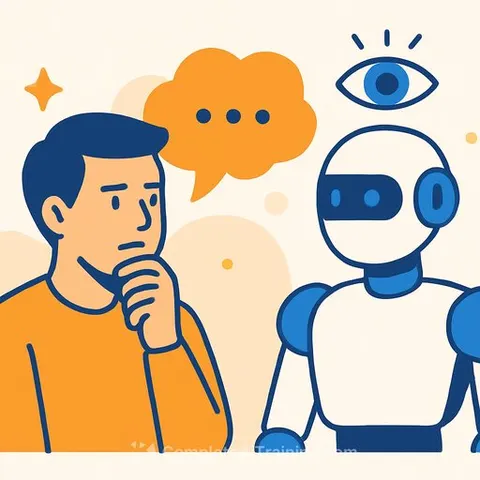
Why We Trust AI Even When It Gets Facts Wrong
AI systems make things up. They add unrequested information. They cite sources that don't exist. And we believe them anyway.
The problem isn't the hallucinations themselves - it's that we're wired to trust fluent, helpful communicators. As AI tools become more human-like in their responses, our evolutionary instincts work against us, making it harder to catch the errors.
Hallucinations Are Built In
These fabrications aren't bugs. They're features of how generative AI and LLM systems work. The models generate outputs without filtering, adding what they think might be helpful even when it wasn't requested.
IBM's research on smaller models found that hallucinations serve a purpose: they help developers understand how the systems function. When a model answers a question about Mars's moons, it might add planetary distances. That extra detail wasn't asked for, but the model included it anyway - and we rarely question it.
Our Brains Mistake Fluency for Competence
A 2025 Elon University study of 500 AI users found that nearly 70% believe AI models are at least as intelligent as they are. Twenty-six percent think AI is significantly smarter.
This confidence stems from how we evolved. We developed linguistic fluency as a marker of intelligence and trustworthiness in social settings. That survival mechanism now works against us. The more an AI tool sounds like it understands and wants to help, the more we trust it - even when it's wrong.
A Wall Street Journal analysis put it plainly: "Our cognitive biases developed to help us survive in complex social environments… [We have] evolved to view linguistic fluency as a proxy for intelligence, engagement, and helpfulness as indicators of trustworthiness."
The Gap Widens as AI Improves
As AI tools become more sophisticated and conversational, the problem gets worse. The systems sound more confident. They respond more naturally. We lower our guard further.
This creates what amounts to a confidence trap. We're less likely to verify information from a source that sounds authoritative and helpful. Yet that's precisely when verification matters most.
What Actually Works
The solution isn't complex. IBM's approach with smaller models includes real-time validation of outputs at key points. But for most users, the antidote is simpler: skepticism.
Slow down. Verify claims. Check sources. Treat AI outputs the way you'd treat information from any source you don't fully know.
Understanding prompt engineering also helps. More specific, detailed prompts reduce the space for unwanted additions. The less ambiguity in your request, the less room the model has to add "helpful" extras.
The convergence of how these systems work and how our brains work creates a real challenge. But awareness changes the equation. Once you know why you're inclined to trust AI, you can choose not to.