
AI news ·
India, Europe and the U.S. take sharply different paths on AI in education
India is scaling AI-driven exams across millions of students; Scandinavia just reversed course after screens hurt learning outcomes. The U.S. is testing a cautious middle path, keeping teachers central to decisions.
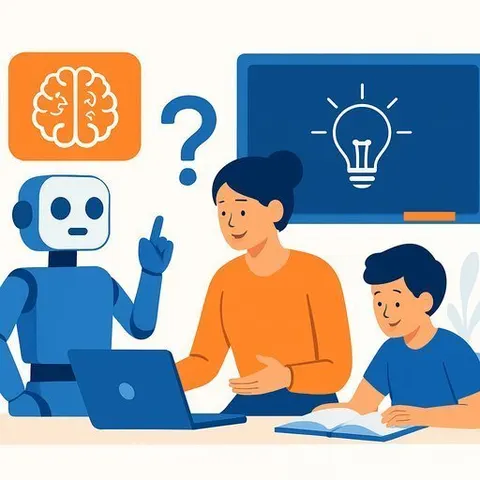
Three Continents Show Vastly Different Approaches to AI in Classrooms
India is racing ahead with AI-driven exams and learning assessments. Scandinavia is pulling back to pen and paper. The United States is experimenting cautiously in the middle. These divergent choices across three continents reveal a fundamental tension in education: AI promises efficiency and scale, but without guardrails, it risks deepening inequity and undermining learning.
The question is no longer whether AI belongs in education. It's how much control educators and institutions exercise over it.
India's Push for Scale
With one of the world's largest student populations and chronic pressure on its education system, India sees AI as a practical solution. Institutions are deploying AI-driven assessments to streamline grading, reduce human bias, and provide faster feedback across thousands of students.
The case for speed is straightforward: traditional methods cannot keep pace with volume. AI-enabled personalization-through adaptive testing or digital tutoring-could help students who might otherwise fall behind, particularly in rural areas with limited resources.
But rapid adoption carries risks. Questions remain unanswered: Do AI assessments work equally well for students with limited digital exposure? Are privacy frameworks strong enough to protect sensitive data? Without safeguards, tools designed to close access gaps could widen them instead.
Europe Steps Back
A Scandinavian government recently reversed course after years of digital classroom experiments. The reason: students showed weaker attention, comprehension, and long-term retention when lessons relied heavily on screens.
Teachers reported higher distraction rates. Parents worried about screen time. Test scores plateaued. The government concluded that digital tools, as deployed, were not improving fundamental learning outcomes.
The retreat wasn't anti-technology. It was a correction. The lesson: unchecked adoption can trigger unintended consequences. Enthusiasm must be matched with rigorous evaluation and willingness to reverse course when evidence demands it.
The U.S. Takes a Middle Path
American universities are piloting AI in controlled environments rather than adopting or rejecting it wholesale. MIT and Stanford use AI tutors to personalize learning and flag struggling students, freeing professors from repetitive work to focus on higher-order teaching.
On assessments, institutions like Princeton and NYU have tested AI-assisted proctoring and grading paired with strict honor codes and human review. The aim: capture efficiency gains while minimizing fairness risks.
Most critically, the U.S. is redefining the teacher's role. Faculty are becoming mentors and ethics guides rather than content deliverers. The message is explicit: AI may handle personalization and assessment mechanics, but humans must preserve integrity, values, and critical thinking.
What These Three Approaches Teach
India demonstrates what scale looks like. Europe shows the cost of overreach. The United States illustrates how to balance innovation with safeguards.
Three lessons emerge across all three regions:
- AI can improve personalization, speed, and fairness-but only if deployed thoughtfully.
- Guardrails are essential to prevent cheating, inequity, and data misuse.
- The teacher's role must evolve, not disappear. Mentoring, ethics, and critical thinking cannot be outsourced.
A practical framework for institutions: Adopt → Adapt → Audit.
Adopt AI tools where they clearly add value, such as reducing grading bias or closing access gaps. Adapt teaching models and policies to ensure fairness and inclusivity. Audit regularly to monitor outcomes, protect data, and catch unintended consequences.
The Decision Belongs to Educators
AI is already in classrooms worldwide. The question is whether institutions will use it wisely.
The path ahead requires designing classrooms where AI enables and humans decide-where algorithms handle efficiency and teachers preserve fairness and judgment. With thoughtful guardrails, AI can help education systems become smarter, fairer, and more inclusive. Without them, technology alone cannot teach us how to learn.
For educators exploring this terrain, AI for Education resources and AI for Teachers programs can help build the knowledge needed to make these decisions with confidence.