
AI news ·
Indian health insurers use artificial intelligence to detect claims fraud in real time
Indian insurers use AI to flag fraudulent claims at pre-authorization, replacing manual reviews. This screening recovers rupees that would otherwise raise customer premiums.
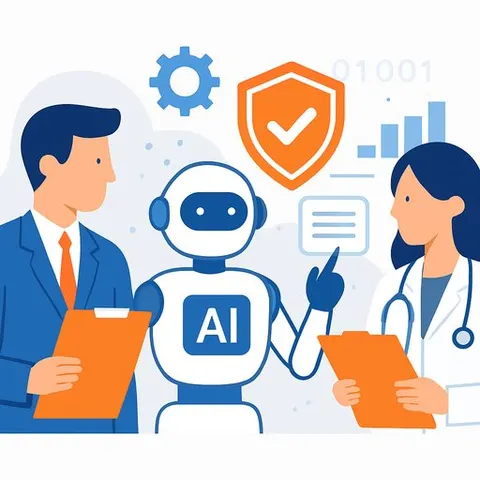
Health insurance fraud in India is quietly pushing up premiums and eroding trust, as billing anomalies and misrepresentation grow more sophisticated. In response, leading insurers are deploying AI-driven fraud detection systems that flag suspicious claims in real time, often before any money is paid out.
Why manual reviews fell short
For years, Indian insurers relied on manual checks and third-party administrator oversight to catch fraud. That approach worked while claim volumes stayed manageable. As cashless hospitalizations surged and insurance spread into tier 2 and tier 3 cities, the cracks became impossible to ignore.
Fraudsters exploited those gaps with ghost patients, fictitious hospitalizations, upcoded procedures, and collusion between intermediaries and hospital billing departments. The real challenge was speed. In a cashless environment where settlements need to happen in hours, extended manual review simply is not an option.
Pattern detection at scale
Fraud is rarely an isolated incident - it leaves a pattern. And pattern detection at scale is exactly what machine learning systems are built for. These platforms are part of a wider shift toward AI for Insurance that is reshaping claims management across the sector.
Today's systems analyze hundreds of data variables the moment a claim is initiated. They cross-reference a claimant's medical history against the procedure, compare billing codes to treatment benchmarks, and assess provider behaviour across thousands of past transactions. They also surface statistical outliers that would be invisible to a human reviewer working through a physical file.
What makes this particularly powerful is the ability to detect network-level fraud - cases where multiple claims, filed under different names at different hospitals over different periods, are actually part of a single coordinated scheme. No manual process can connect those dots at speed. AI can.
Moving fraud detection upstream
Insurers are now intercepting fraud earlier in the claims lifecycle. Rather than trying to claw back money after a fraudulent claim is paid, AI-driven checks happen at the pre-authorization stage. Suspicious cases get flagged before any payout, triggering human investigation only where the analytics clearly warrant it.
This shift gives fraud teams a sharper focus. Instead of sifting through every flagged claim manually, they prioritize high-probability cases. The result: claims are settled faster, noise is reduced, and fraud interception becomes more effective. Some insurers are even pooling anonymized claims and provider data into shared models, giving everyone visibility into patterns no single firm would catch on its own.
Reality on the ground
AI-led fraud detection in India is not without hurdles. Data quality is inconsistent, especially in smaller nursing homes and clinics where digital record-keeping is still nascent. Training reliable models demands large, well-labelled datasets, and India's regional diversity in treatment practices can sometimes trigger false positives.
IRDAI's ongoing push toward standardized health data and better interoperability between insurers and providers is expected to strengthen the ecosystem. As structured data becomes more available, detection models will grow sharper.
Trupti Balasubramaniam, CEO and Principal Officer of Probus, said, "What AI has given Indian insurers is not a permanent solution - it is a dynamic, continuously learning capability that can keep pace with that evolution."
Why this matters for insurance professionals
For claims managers, underwriters, and fraud investigators, the shift to AI-driven detection changes the daily workflow. Instead of drowning in low-value manual reviews, teams can focus on high-probability cases that genuinely need human judgment. Every rupee recovered through better fraud detection is a rupee that does not get passed back through higher premiums - directly linking operational efficiency to customer retention and product pricing. The professionals who learn to work with these models, not just beside them, will define the next chapter of India's health insurance market.