
AI news ·
India's healthcare sector prioritizes artificial intelligence for measurable clinical outcomes
Indian healthcare providers are moving past AI pilots to demand tools proving measurable clinical results. Buyers require evidence that software improves patient care.
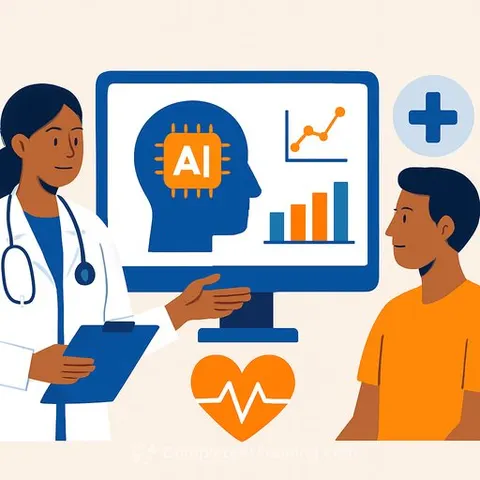
Hospitals, diagnostic centres, and digital health platforms across India are moving AI adoption beyond pilot projects and toward solutions that demonstrate clear clinical and operational results. The shift comes as healthcare organisations face mounting pressure to improve patient outcomes while managing strained resources, and it is reshaping how enterprise AI products are evaluated in one of the country's most critical sectors.
The emphasis is no longer on technology for its own sake. Leaders now ask whether an AI tool can perform reliably across different patient populations, integrate into clinical workflows without friction, and meet strict standards for safety, privacy, and regulatory compliance. As one senior decision-maker put it, "the conversation is increasingly focused on trust."
Why healthcare sets a higher bar for AI
Few industries tolerate error margins as thin as those in medicine. When software supports tasks like diagnosis, care mapping, or patient monitoring, accuracy and reproducibility become non-negotiable. Providers need evidence that a solution will hold up under real-world conditions - not just in a controlled study or a single hospital site.
This environment demands that AI products be assessed through a different lens. Clinical outcomes, long-term scalability, data privacy, and ethical oversight now carry as much weight as algorithmic performance. Organisations are scrutinising whether a tool helps clinicians make better decisions, speeds up diagnostics without sacrificing quality, or frees staff to spend more time with patients. The answers determine which products get adopted and which stall at the evaluation stage.
Measurable impact replaces experimentation
Healthcare buyers are becoming more selective. Faster diagnostics, improved resource allocation, and stronger patient outcomes have turned into essential benchmarks. This results-first mindset is separating sustained AI for Healthcare innovation from short-lived enthusiasm. Across the ecosystem, hospitals, MedTech firms, and digital health providers are funding applications that solve specific operational problems - from streamlining clinical workflows to expanding telemedicine reach.
The strongest offerings combine technical capability with hard evidence. For instance, an imaging tool isn't judged solely by its sensitivity scores in a research paper; it must prove it can reduce report turnaround times in a working radiology department. This insistence on demonstrable value is changing procurement conversations and vendor relationships industry-wide.
Recognising products that deliver results
As the market matures, efforts to spotlight meaningful innovation have gained prominence. The ET Most Innovative AI Product Awards 2026 includes a Healthcare & MedTech category that highlights solutions for diagnostics, treatment support, patient engagement, telemedicine, clinical workflows, and healthcare operations. The award reflects a broader industry recognition that healthcare innovations carry a bigger responsibility - they must help clinicians act with greater confidence, help systems run more effectively, and help patients receive quality care without delay.
Why this matters for healthcare professionals
For clinicians, administrators, and health tech teams, the evolving procurement criteria offer a clear signal: the AI tools that last will be those that integrate into daily practice, respect privacy boundaries, and show measurable improvement on metrics that directly affect patient care. When evaluating a new platform or pitching an internal investment, tie every claim to a verifiable outcome - a shorter time to diagnosis, a reduced bed turnover interval, or a quantified drop in administrative burden. In a sector where trust is the currency, evidence is what builds it.