
AI news ·
Insurance CEOs say AI shifts human roles rather than eliminates them, study finds
Insurance executives across Europe, North America and Asia-Pacific have moved AI from pilot programs into daily underwriting, claims and customer service operations. Leaders say roles are shifting toward complex judgment work, not shrinking.
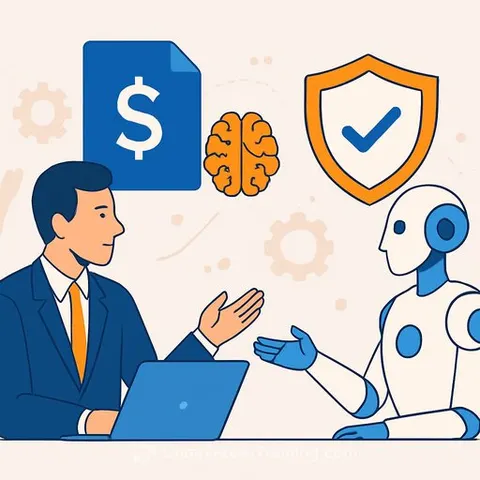
Insurance chiefs see AI as tool to strengthen human judgment, not replace it
Insurance executives are shifting from AI experiments to daily operational use across underwriting, claims and customer service, according to a cross-market study of carriers in Europe, North America and Asia-Pacific. Rather than cutting jobs, leaders say the technology will refocus staff on higher-value work that requires human judgment and expertise.
The study, based on interviews with CEOs and senior leaders, found that AI is now embedded across the insurance value chain. Carriers are automating document processing, claims triage, fraud detection and customer service while keeping experienced professionals in charge of complex decisions.
From pilots to standard operations
Insurers have moved past proof-of-concept phases. Tools that synthesize large data volumes, assist with case triage and help underwriters and claims handlers work faster are now part of day-to-day workflows.
Cost control is a primary driver. Automating submission intake, document processing and routine tasks frees resources for more valuable work. That includes simplified rating systems, modern architecture and better risk selection.
Jobs change shape, not disappear
A central finding: AI should enhance human capabilities, not erode them. CEOs rejected the premise that automation inevitably destroys jobs.
Instead, roles are shifting. Front-line staff move away from repetitive data entry toward case management, relationship building and advisory work. Underwriters and claims professionals spend less time gathering information and more time on complex judgment calls, negotiation and portfolio decisions.
Reskilling is a priority. Staff need stronger data literacy and the ability to work effectively with AI tools. Insurers describe this as a gradual change in the skills profile they need, not simple headcount reduction.
Enterprise-wide deployment raises governance questions
AI is expanding from isolated pilots to company-wide capability. Generative AI and intelligent automation are expected to influence product design, pricing, claims automation and customer engagement across core platforms.
That scale raises practical questions. Senior executives and boards must now oversee model risk, bias and explainability across multiple AI uses. They must ensure alignment with risk appetite, conduct standards and fair-treatment obligations.
Regulators in major insurance markets are signaling increased scrutiny of how financial institutions deploy AI, particularly in areas affecting pricing, underwriting and claims. Risk and compliance leaders are treating AI as a prudential and conduct issue alongside its technology dimensions.
Risk management transforms with human expertise still central
Technology is reshaping how insurers quantify and assess risk. In property and specialty lines, wider use of external data is changing both primary underwriting and reinsurance discussions.
In life and health, richer data and sophisticated analytics influence product design and pricing. These advances also require closer attention to privacy, consent and ethical data use.
Across all segments, experienced underwriters and risk managers remain essential. They balance technical outputs with commercial judgment, risk appetite and regulatory expectations. AI functions as an aid to risk selection and monitoring, not a decision-maker replacement.
For professionals in insurance, the shift means AI for Insurance is no longer optional knowledge. Understanding how AI Agents & Automation fit into your role-and where human judgment remains irreplaceable-is becoming essential to staying effective in the industry.