
AI news ·
Insurers cut jobs for AI despite missing cost-saving targets
Insurance job cuts linked to AI fail to improve returns, even though 80% of firms deploying the tech reduce headcount. Acrisure alone eliminated 2,250 roles.
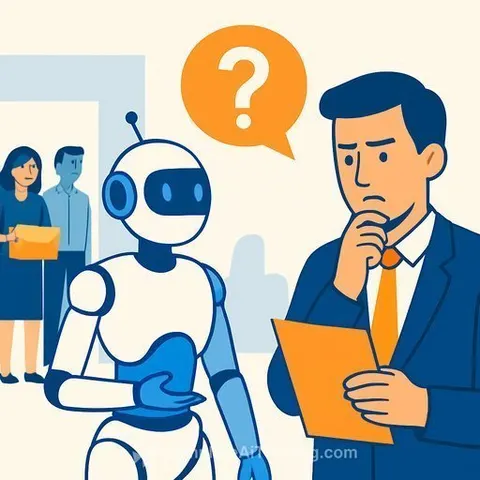
Insurance companies have cut tens of thousands of jobs since late 2024 and explicitly linked those reductions to AI and automation. Yet emerging research from Gartner shows that workforce cuts do little to improve the returns organizations get from the technology-firms with weak AI results cut jobs at nearly the same rate as those with strong returns.
Approximately 80% of organizations that have piloted or deployed autonomous business capabilities have carried out workforce reductions, according to Gartner. The findings come as insurers, brokers, and health plans eliminate positions at a pace not seen in years.
Acrisure announced in May 2026 it would cut 2,250 jobs, roughly 11% of its global workforce, with reductions continuing through 2027 and focused on US operations. The move followed an earlier cut of 400 accounting and back-office roles in October 2025. Allianz has reportedly planned to remove up to 1,800 positions in its travel insurance division as AI handles manual processes. Munich Re-owned ERGO intends to reduce its workforce by about 1,000 positions by 2030 as it automates traditional insurance tasks.
AI shifts work toward judgment and customer interaction
Peter McMurtrie, a partner in West Monroe's insurance practice, said the changes should not be viewed simply as machines replacing workers. "The industry has been automating repetitive processes for more than a decade," he said. "AI is accelerating what can be automated while improving the quality of that automation. The result is a fundamental shift in the knowledge, skills, and abilities needed for the work that remains, which increasingly centers on complex decision-making, judgment, and customer interactions."
Operational functions with repetitive work face the most disruption. Transactional claims processing, customer service, and underwriting support are areas where administrative duties can increasingly be handled by technology. The shift means demand is growing for professionals who combine deep insurance knowledge with technical skills, a trend reshaping hiring across the sector and driving more investment in AI for Insurance training.
Job cuts alone will not produce AI returns
Gartner analyst Helen Poitevin warned that workforce reductions may free up money but do not, by themselves, produce a return from AI. Organizations that improved returns were more likely to invest aggressively in employee skills, redesigned roles, and operating models that let people oversee and scale autonomous systems.
McMurtrie sees the most effective insurers using efficiency gains to redirect resources rather than treating headcount reductions as the end goal. "Every insurer is under pressure to manage expenses, but the strongest companies aren't just taking costs out. They're reinvesting those savings into AI, data, digital capabilities, and modern technology," he said. That self-funding approach to transformation is at the center of many AI for Executives & Strategy decisions.
But the model depends on projected savings actually materializing. Bain & Company's 2026 Automation and AI Pathfinder Survey found that nearly 40% of companies measuring AI cost savings achieved reductions below 10%, even though they had targeted savings of 11% to 20%. Despite that gap, 90% planned to increase their AI budgets, and 44% expected to fund generative and agentic AI investments using savings from earlier automation initiatives.
The combination of job cuts and weaker-than-expected savings creates a risk that companies will remove capacity before new systems can reliably perform the work. Gartner researchers cautioned against imposing hiring freezes or headcount reductions in anticipation of AI benefits before the capabilities are operating in production.
Why this matters for insurance professionals
The future of insurance roles is not about choosing between technology and industry expertise. "The future belongs to insurance professionals who combine deep insurance industry knowledge with technology, not one or the other," McMurtrie said. Hiring is becoming more selective, with demand shifting toward workers who can blend technical skills with established insurance judgment. For those already in the field, building AI and data literacy while deepening domain knowledge is the clearest path to remaining indispensable as automation accelerates.