
AI news ·
Insurers face mounting challenges as AI pilots fail to deliver
Insurers are investing heavily in AI, but most pilots produce disconnected tools that never scale. Fragmented systems trap data and inflate maintenance costs without delivering results.
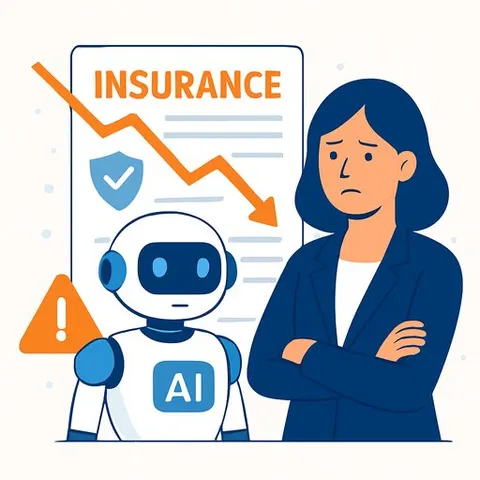
Why AI pilots stall in insurance
Premium growth has ground to a halt across the sector. At the same time, unpredictable weather patterns are driving up claims costs. Customers are demanding discounts. Leaders looked to artificial intelligence as a solution to all three problems, but the approach was hasty.
Instead of a unified strategy, carriers deployed point solutions in a rush. Underwriting, claims, and customer service teams each adopted separate tools. These tools rarely share data. The result is a patchwork of disconnected AI tools that create maintenance headaches without delivering enterprise-wide impact.
The cost of fragmentation
Disconnected AI systems generate duplicate work and conflicting insights. An underwriting model might flag a risk that the claims algorithm misses. Data trapped in silos stops the company from forming a single view of the customer. Integration problems eat into the savings that AI promised to deliver.
IT teams spend time stitching systems together instead of refining models. Pilot projects linger for months or years because no one built the data pipelines needed to move them into production. The sunk cost grows while the business case stays unproven.
Moving beyond isolated tools
Understanding the unique challenges of AI for Insurance is key to moving from pilots to production. Carriers that treat AI as a company-wide capability, not a collection of vendor features, see better results. That means investing in shared data infrastructure, cross-functional governance, and the skills to connect models to real workflows.
Industry analysts point to insurers that paused new AI purchases until they built a central data layer. Those firms cut duplicate tools and started graduating pilots to scaled deployments. The focus shifted from buying more technology to making existing technology work together.
Why this matters for insurance professionals
When AI pilots fail, the blame often lands on the technology. The real problem is usually organizational. Insurance professionals should challenge siloed purchasing and demand that every AI investment ties back to a measurable operational goal-lower claims leakage, faster underwriting, or more accurate pricing. Without that discipline, the gap between AI promise and reality will widen.