
AI news ·
Insurers struggle to turn AI insights into action despite heavy investment
Insurers are facing an AI execution gap where insights from models never reach final decisions due to siloed systems and manual workflows. Earnix's AIOS platform aims to close that gap by orchestrating models, rules, and approvals without replacing core infrastructure.
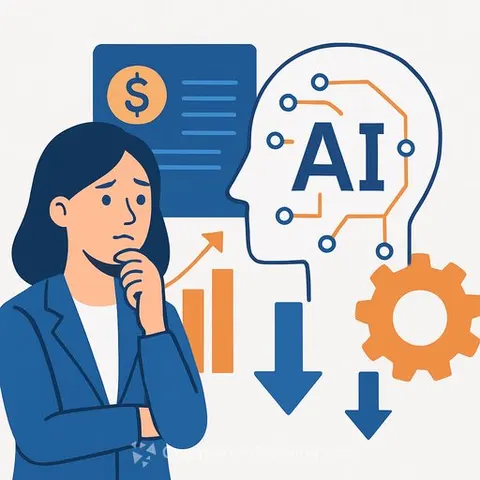
Insurance companies are pouring money into AI for risk assessment, pricing, underwriting and claims. But a growing body of evidence shows that sophisticated models alone do not translate into faster, more consistent decisions. Earnix, a provider of AI orchestration software, argues the industry is hitting an AI execution gap - the disconnect between generating an insight and actually using it in a business decision.
An actuary can refine a model, a data team can produce a risk score and an underwriter can receive a recommendation. Siloed systems, manual approvals, IT dependencies and fragmented business rules still stand between that intelligence and the final call. The problem is becoming more urgent as insurers face shifting risk conditions, rising claims costs and tighter margins. In markets like France, firms are also managing interconnected risks across legacy technology stacks, multiple distribution channels and complex approval workflows.
Insights trapped between systems
Insurers already run a wide range of AI use cases. Models flag emerging claims trends, support risk selection, sharpen pricing and identify customers likely to churn. Generative AI summarises information and produces recommendations. Agentic AI coordinates multi-step workflows. The trouble is these capabilities often stay isolated. Pricing, underwriting, claims and customer engagement systems operate independently even though the decisions they support are tightly linked.
A change in risk can shift underwriting appetite and pricing simultaneously, while a pricing or underwriting decision shapes what a customer ultimately sees. When systems are disconnected, valuable insights get trapped between development and production. Employees end up manually interpreting output from one system before feeding it into another, slowing decisions and increasing inconsistency.
Orchestration over model sophistication
Earnix positions its AIOS platform as an orchestration layer that connects existing systems, data and models with business rules, workflows, human approvals and operational actions. The system can use predictive, generative or agentic AI depending on the decision, while keeping governance and human oversight embedded in the process.
The company identifies several requirements for making AI an operational capability: cutting the time between a signal and an action, adapting decisions without rebuilding core systems, applying automation at the right level and building governance directly into decision-making. This matters especially in highly regulated markets where AI-generated decisions must be explainable, auditable and subject to oversight. AIOS is designed to work across existing technology environments rather than forcing insurers to replace core infrastructure.
The wider shift moves the conversation away from the sophistication of individual models and toward what happens after a model produces an insight. For insurers, competitive advantage may increasingly depend on how quickly they can connect intelligence to pricing, underwriting, claims and customer decisions. Earnix is betting the next stage of insurance AI will be defined less by better models and more by the ability to turn those models into governed, measurable action.
Why this matters for insurance professionals
The operational gap between AI insights and actual decisions is not a technology problem alone - it is a workflow, governance and systems-integration problem. Underwriters, actuaries and claims managers should watch whether orchestration layers like Earnix AIOS reduce the manual steps between a model's output and a binding decision. If they do, the firms that close the AI Agents & Automation loop fastest will gain an edge in pricing accuracy, claims responsiveness and customer retention. For professionals working in AI for Insurance, the message is clear: the value is shifting from building models to operationalising them at scale.